Home/ Programmes/ Public Health
Programme Pillar · Lesotho & Africa

Public Health as a Question of
Dignity, Access, and Justice

CDSJ approaches public health not as a narrow technical field limited to clinics and diseases, but as part of a broader development agenda — concerned with how people live, what risks they carry, and how public institutions perform in moments of need.

Primary Health Care HIV & TB Maternal & Newborn Health Mental Health Prevention & Resilience Health Governance Climate & Shocks
Our Approach

Health Outcomes Are Shaped by More Than Services

CDSJ understands public health as part of a broader development agenda concerned with whether people can reach care in time, whether they can afford the journey, whether they trust the system enough to seek help, and whether institutions respond with seriousness and care.

In many communities — especially those already living with poverty, distance, weak infrastructure, and social vulnerability — public health is experienced not as a neat sector, but as part of a much larger struggle to live safely and well.

"Our Public Health pillar brings together prevention, community systems, accountability, health equity, and institutional responsiveness — because healthier communities require systems that are accessible, trusted, inclusive, and able to respond to the realities people face."
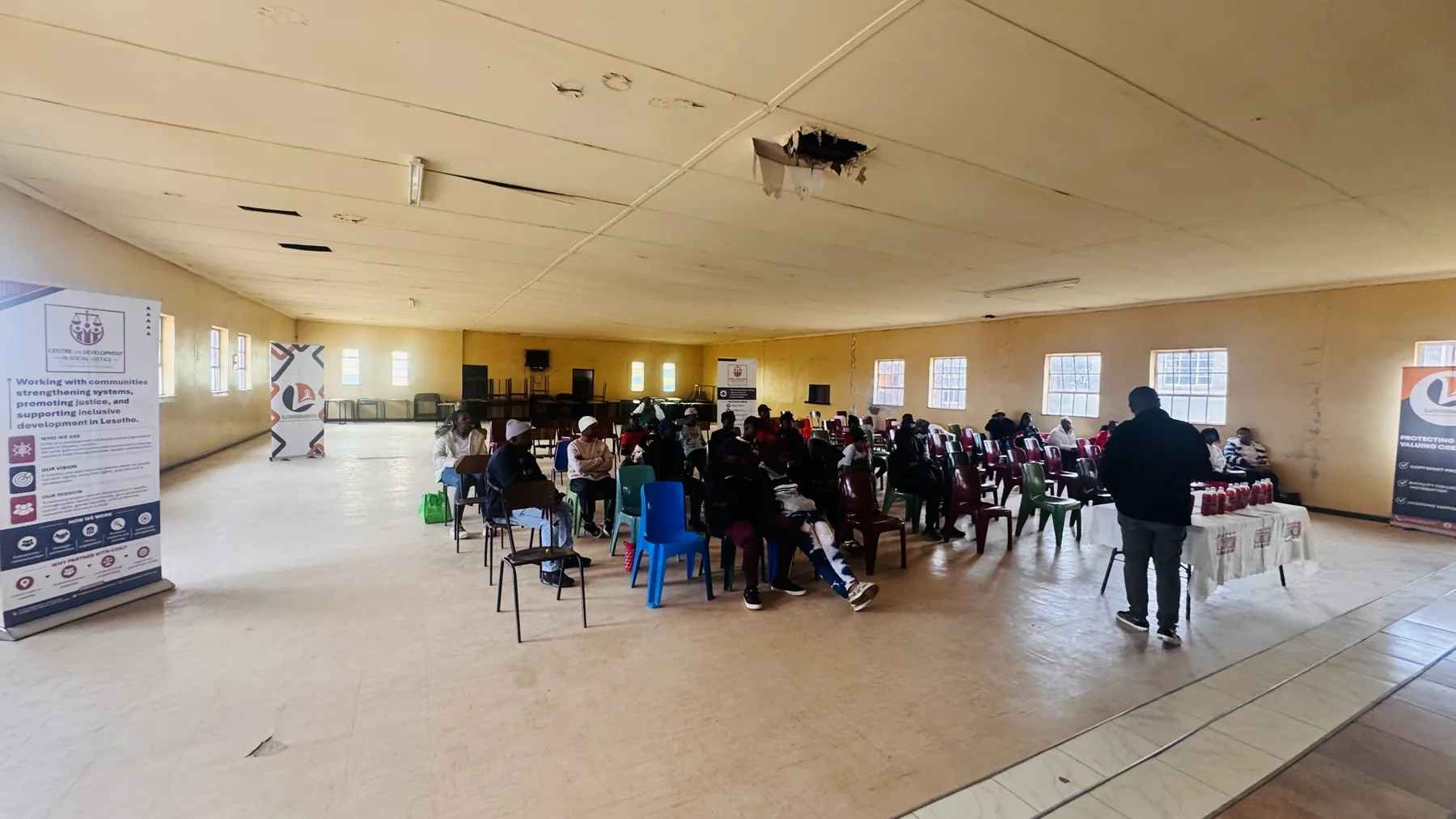
CDSJ Public Health — community health
The Challenge

The Development Challenge in Lesotho

Health vulnerability is rarely isolated — it is linked to poverty, transport barriers, harmful gender norms, poor accountability, and inadequate community participation in decisions that shape health priorities.

478
Maternal deaths per 100,000 live births in Lesotho (2023) — progress and vulnerability continue to coexist.
~45%
Of deaths in Lesotho attributed to non-communicable diseases (WHO, 2019) — a dual burden alongside HIV and TB.
Dual Burden
Lesotho faces communicable and non-communicable disease simultaneously — requiring integrated, equity-driven responses.

Serious public health programming now turns on strong primary health care, resilient systems, community trust, equity for missed populations, and financial sustainability. These shifts are visible across WHO, the Global Fund, Gavi, and UNAIDS — all of which now place stronger emphasis on community-led delivery and sustainability of gains.

Programme Ambition

Closing the Distance Between Policy and Lived Experience

CDSJ's ambition is to help close the distance between national commitments and lived experience — working in the spaces where public health outcomes are often won or lost: prevention, community systems, access pathways, accountability, and the practical responsiveness of institutions.

Community-Facing

Strengthening everyday access and prevention

Working directly with communities on prevention, access pathways, health literacy, and accountability to strengthen the daily conditions that shape health outcomes.

Systems-Facing

Improving institutional responsiveness

Engaging institutions, policies, and structures to improve responsiveness, accountability, and the ability of public systems to deliver equitable care under pressure.

Evidence-Driven

Generating evidence for advocacy and improvement

Generating and using evidence to guide advocacy, improve programming, and connect public health priorities to the realities communities experience on the ground.

What This Pillar Covers

Seven Workstreams for Equitable Health

Seven interconnected workstreams that together address the full range of conditions shaping public health outcomes in Lesotho and across the region.

1

Primary Health Care Access & Last-Mile Community Health Systems

Strengthening the practical foundations of PHC by focusing on points where communities most often experience delay, exclusion, or breakdown — through community health promotion, outreach support, referral pathways, and health information.

2

Sustaining HIV & TB Gains Through Community-Rooted Responses

Supporting integrated, people-centred epidemic responses including community-led prevention, treatment literacy, stigma reduction, service access pathways, adherence support, and stronger accountability around quality of care.

3

Sexual & Reproductive Health, Maternal & Newborn Health, Adolescent Health

Advancing rights-based access to information, services, referral, and community support for women, girls, adolescents, and children — including family planning, maternal care awareness, and nutrition work connecting early life health to household resilience.

4

Mental Health, Psychosocial Wellbeing & NCD Awareness

Bringing mental health and the changing burden of ill health closer to community practice — through awareness, early identification, community dialogue, psychosocial support linkages, and connecting mental health to gender, livelihoods, and youth vulnerability.

5

Prevention, Immunisation-Supportive Environments & Health Resilience

Strengthening prevention through community-led health literacy, healthy behaviour promotion, immunisation-supportive engagement, early risk identification, and interventions that build stronger protective conditions around households and communities.

6

Health Governance, Community Accountability & Data-Informed Decision-Making

Strengthening accountability and participatory quality of health systems through community feedback mechanisms, health rights awareness, social accountability processes, evidence generation, and stronger dialogue between communities and public institutions.

7

Climate-Responsive, Shock-Aware & Resilient Public Health Systems

Supporting public health approaches better able to anticipate, absorb, and respond to shocks from climate variability, outbreaks, and environmental stress — through community preparedness, risk communication, continuity of essential services, and locally grounded resilience measures especially for rural communities, women, children, and low-income households.

Our Methods

How We Work

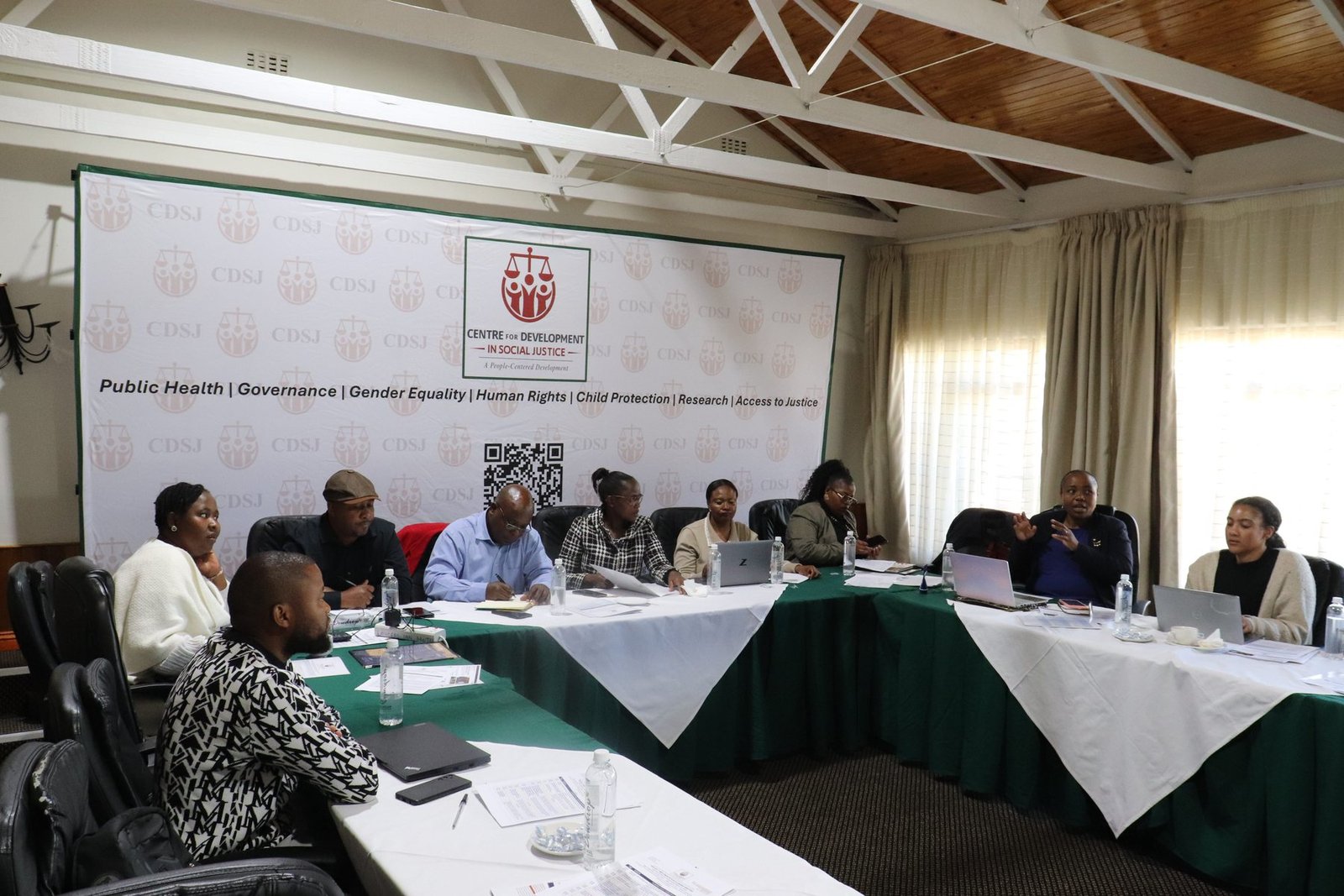
CDSJ team reviewing health data

CDSJ's Public Health pillar is both community-facing and systems-facing. We work in the space between people's lived realities and institutional performance — paying attention to whether communities receive useful information, whether referral pathways function, whether young people trust services, and whether accountability mechanisms exist.

  • Research & Evidence GenerationFor advocacy and programme improvement, generating data that connects public health priorities to community realities.
  • Community Dialogue & PreventionGrounded in local realities, supporting community-led prevention and health literacy efforts.
  • Technical Support & Programme DesignFor health organisations and institutions working on equity, access, and accountability.
  • Health Education & Social Behaviour ChangeCommunication that reaches people in ways that make sense and build trust.
  • Referral Pathway StrengtheningBuilding feedback mechanisms that make care more reachable and services more trusted.
  • Coalition-Building & Institutional StrengtheningFacilitating collaboration between civil society, communities, and public actors.
Who We Prioritise

Priority Populations & Contexts

CDSJ is especially concerned with populations whose health outcomes are most affected by distance, poverty, stigma, weak information, unequal power, and low institutional responsiveness.

🏘️

Rural & Low-Access Communities

Where services are formally present but practically difficult to reach due to distance, transport, and infrastructure gaps.

👩

Women & Girls

Including adolescent girls and young women facing layered barriers to sexual, reproductive, and maternal health care.

🧒

Children & Young People

Whose access to early life health, nutrition, immunisation, and adolescent services is shaped by household vulnerability.

🎗️

People Living with HIV

Requiring sustained epidemic responses, treatment literacy, adherence support, and stigma reduction at community level.

🤝

Marginalised Groups

Socially excluded populations whose needs are poorly served by formal systems and whose voices are absent from health decision-making.

Shock-Exposed Communities

Households whose access to care is most fragile under climate variability, outbreaks, and service disruption.

Impact

Results We Aim to Contribute To

Through this pillar, CDSJ contributes to stronger systems, more equitable access, and more resilient communities across Lesotho's public health landscape.

Stronger primary health care linkages and improved access to essential services for underserved populations

Better-informed, more health-literate communities with meaningful participation in health decisions

More responsive institutions that listen to community feedback and act on what people experience

More effective prevention and stronger referral and support pathways for vulnerable populations

Improved continuity between community and facility-based care with deeper accountability at all levels

Public health responses better able to withstand pressure, shocks, and changing funding environments

Partner With CDSJ on Public Health

Whether you are a health funder, government institution, research organisation, or civil society partner — CDSJ offers grounded expertise, community legitimacy, and the systems knowledge to help you achieve real and lasting health outcomes in Lesotho.