Legal empowerment
Make rights and options practical, understandable and connected to the problems people are trying to solve.
Justice must be understandable, reachable and worthy of trust. CDSJ strengthens the pathways through which people seek protection, fair treatment, explanation, remedy and institutional accountability.
It is experienced when a person does not know where to go, when distance and cost block a remedy, when a survivor is repeatedly redirected, when a complaint receives no explanation, or when an institution’s procedures are technically correct but impossible for the public to navigate.
CDSJ treats access to justice as a full pathway. We connect rights awareness, community support, coordinated referrals, survivor protection, oversight, institutional practice and evidence-led reform so that justice can be encountered in ordinary life.
Make rights and options practical, understandable and connected to the problems people are trying to solve.
Strengthen navigation, referral and coordination so people are not lost between community and institution.
Improve professional practice, complaints, oversight, data and reform so systems learn and answer to the public.
Our ambition is people-centred justice: communities able to recognise and pursue their rights, survivor and vulnerable-person pathways that protect dignity, and institutions that respond fairly, transparently and consistently.
Begin with lived experience, local knowledge, risks and strengths.
Co-design practical responses with communities and capable partners.
Improve the people, pathways and institutions that must endure.
Use evidence and reflection to improve practice and shape fairer systems.
This pillar extends from community legal empowerment to institutional strengthening. It focuses especially on the points where people are commonly silenced, redirected or left without resolution.
Translate law, policy and institutional processes into practical information that helps people recognise injustice, understand options and make informed decisions about where and how to seek help.
Strengthen signposting, accompaniment and coordination so people can move more clearly between community support, protection, health, police, courts and other institutions.
Build trusted local capacity to identify concerns early, document them safely and connect people with lawful, rights-based and appropriate routes to assistance or redress.
Support survivor-centred, child-sensitive and disability-inclusive pathways that reduce secondary harm and improve coordination around safety, evidence, care and legal response.
Strengthen mechanisms through which people can raise grievances, receive explanation, track follow-through and contribute to institutional learning.
Provide technical support, tools, training and reflective processes that improve how public systems communicate, coordinate and treat the people who rely on them.
Generate legal and lived-experience evidence, convene justice actors and translate implementation learning into practical institutional and policy reform.
Justice pathways should be tested against the experience of people who face the greatest barriers of distance, cost, fear, stigma, age, disability, language or unequal power.
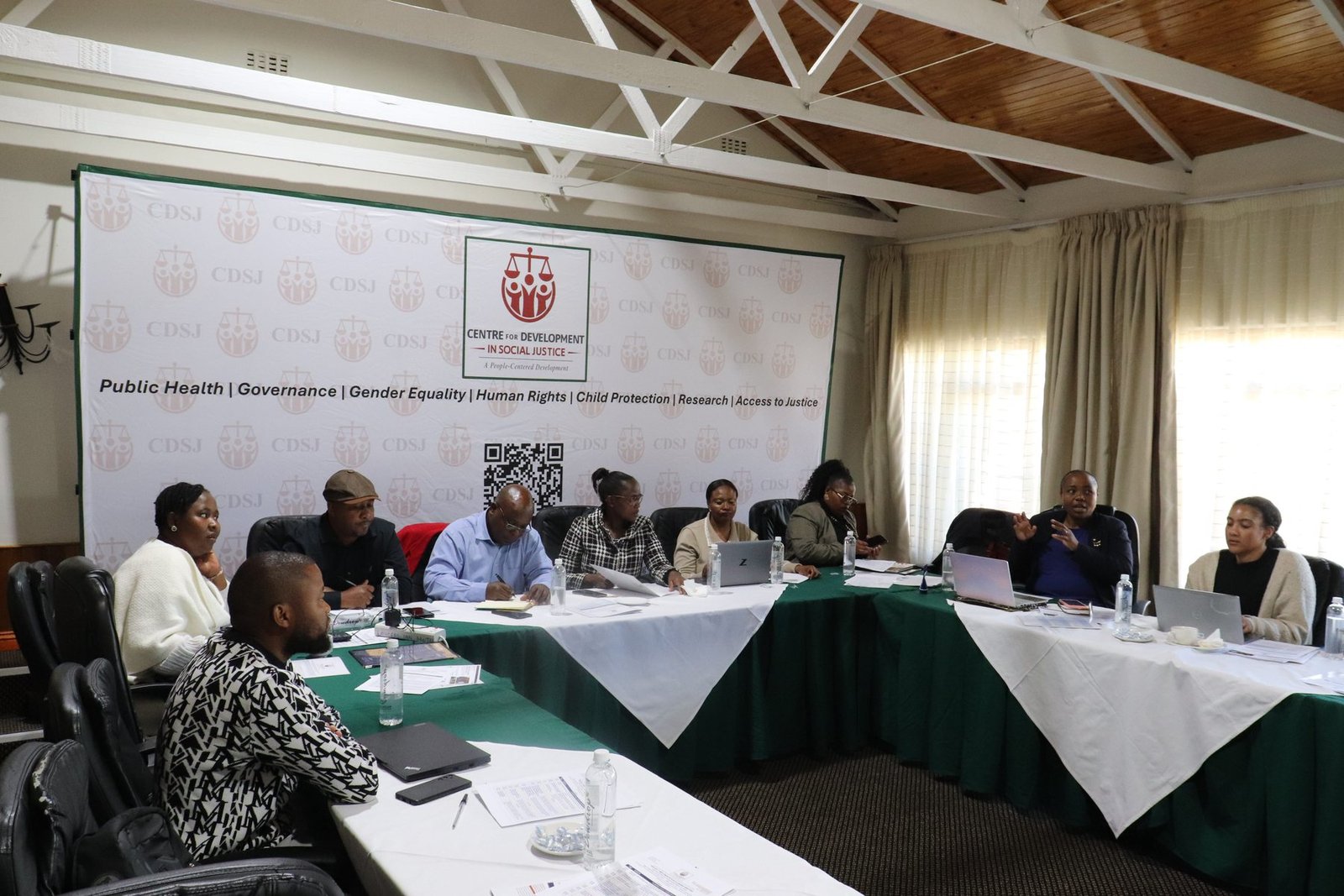
A multi-level initiative linking case support, legal analysis, institutional capacity and public dialogue on gender-just criminal justice.
Explore this work →
Legal information and referral are integrated with protection, education, psychosocial wellbeing, savings and livelihoods.
Explore this work →We aim to help rights holders move from confusion to informed action while strengthening the institutional practices and accountability mechanisms that determine whether a case, complaint or grievance receives a fair response.
Explore evidence & resources →We welcome justice institutions, funders, legal-empowerment organisations, civil-society partners and researchers committed to practical access, survivor dignity, institutional learning and accountable reform.
Equip rights holders and trusted community actors with practical information, navigation and referral support.
Improve tools, professional capability, complaints, referrals and the quality of the public’s encounter with justice systems.
Connect legal analysis, justice data and lived experience to credible institutional and policy change.