Tag: Gender-Based Violence

  • CDSJ, Ministry of Gender and MISA Strengthen Gender-Responsive Journalism in Lesotho

    CDSJ, Ministry of Gender and MISA Strengthen Gender-Responsive Journalism in Lesotho

    The Centre for Development in Social Justice (CDSJ) partnered with the Ministry of Gender, Youth and Social Development and the Media Institute of Southern Africa (MISA) Lesotho to strengthen male journalists’ understanding of gender equality, gender-based violence and responsible public-interest reporting. CDSJ led the training contribution on Gender-Responsive Budgeting and its practical application to gender-responsive reporting.

    Date9 September 2026
    VenueMinistry of Gender, Maseru
    PartnersMinistry of Gender, MISA Lesotho and CDSJ

    The one-day Male Journalists’ Workshop on Gender, Gender-Based Violence and Responsible Media Reporting brought emerging and practising media professionals into a structured conversation about the influence journalism has on public understanding, social norms and accountability in Lesotho.

    The workshop responded to a practical concern: a reporter may cover a case of violence, a government programme or a national budget without recognising how gender roles, unequal power, disability, location, poverty and access to information shape the experience behind the headline. When these dimensions are missed, reporting can unintentionally reinforce stereotypes, blame survivors or present an official allocation as proof that a public problem has been solved.
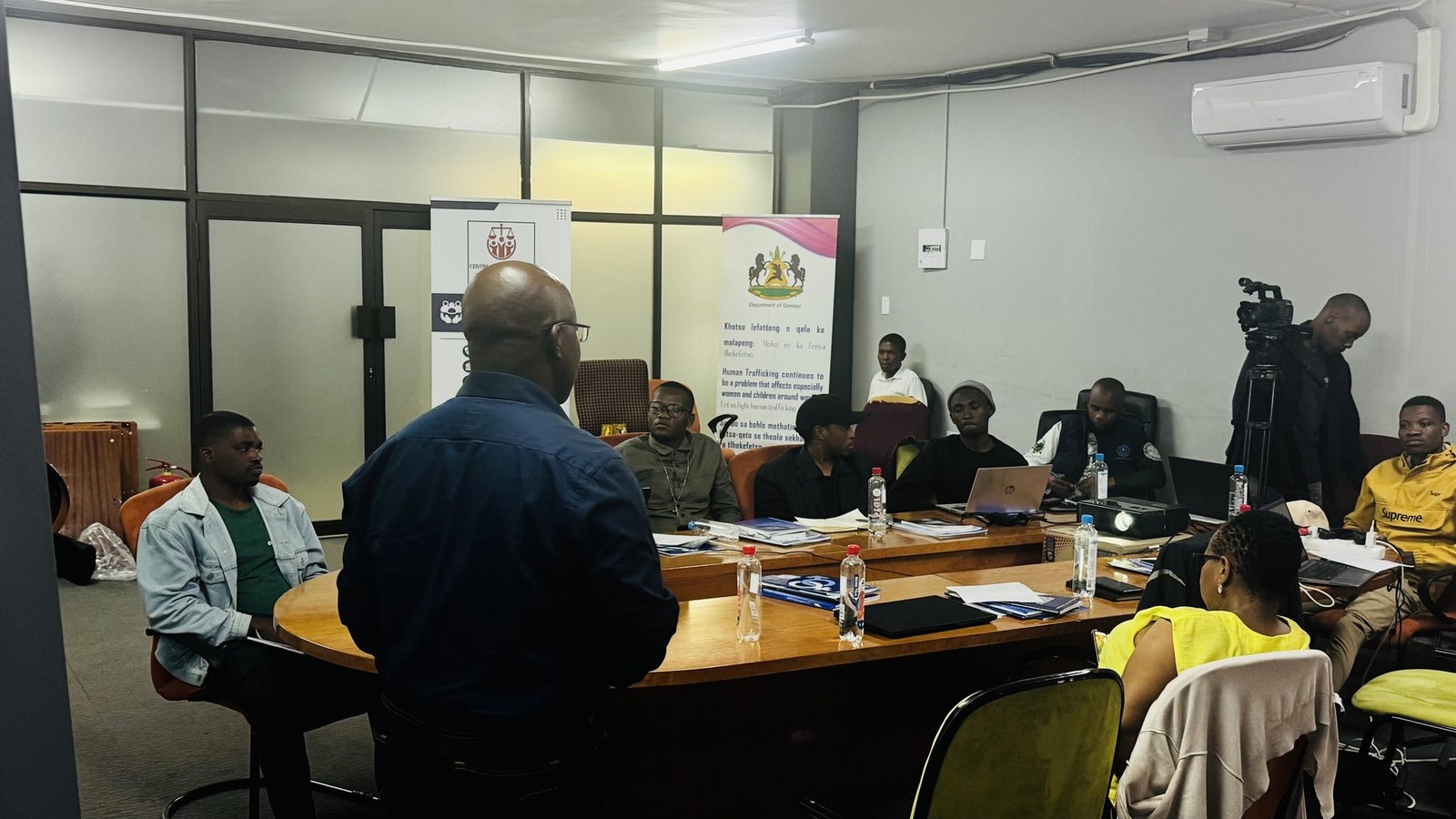
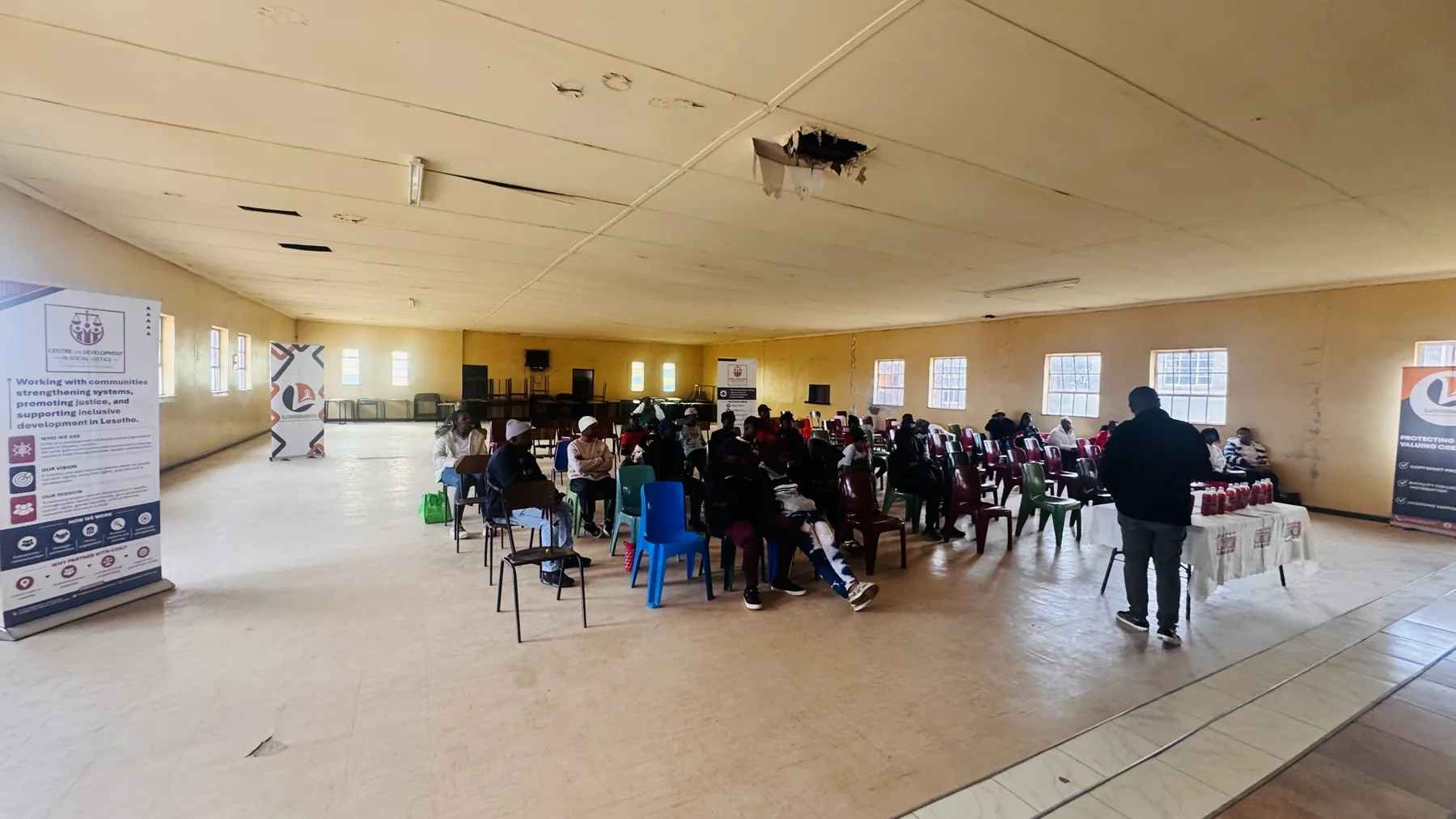
    CDSJ facilitator leading a Gender-Responsive Budgeting discussion with male journalists in Maseru
    CDSJ’s session connected public budgets with the lived realities journalists encounter in communities and public institutions.

    A shared investment in responsible journalism

    The Ministry of Gender convened the workshop as part of its work to strengthen gender mainstreaming, GBV prevention and coordination with the media. The programme introduced gender concepts, the forms and causes of GBV, positive masculinity, protection from sexual exploitation, abuse and harassment, and gender mainstreaming. It concluded with practical work on gender-responsive and ethical journalism, group reflection and participant commitments.

    This partnership recognised that journalists do more than record events. Choices about language, sources, images, headlines and context can either protect dignity and deepen public understanding or reproduce the same harmful norms that gender-equality work seeks to change. Male journalists therefore have an important role as informed reporters and as allies who can challenge victim-blaming, sensationalism and silence around violence.
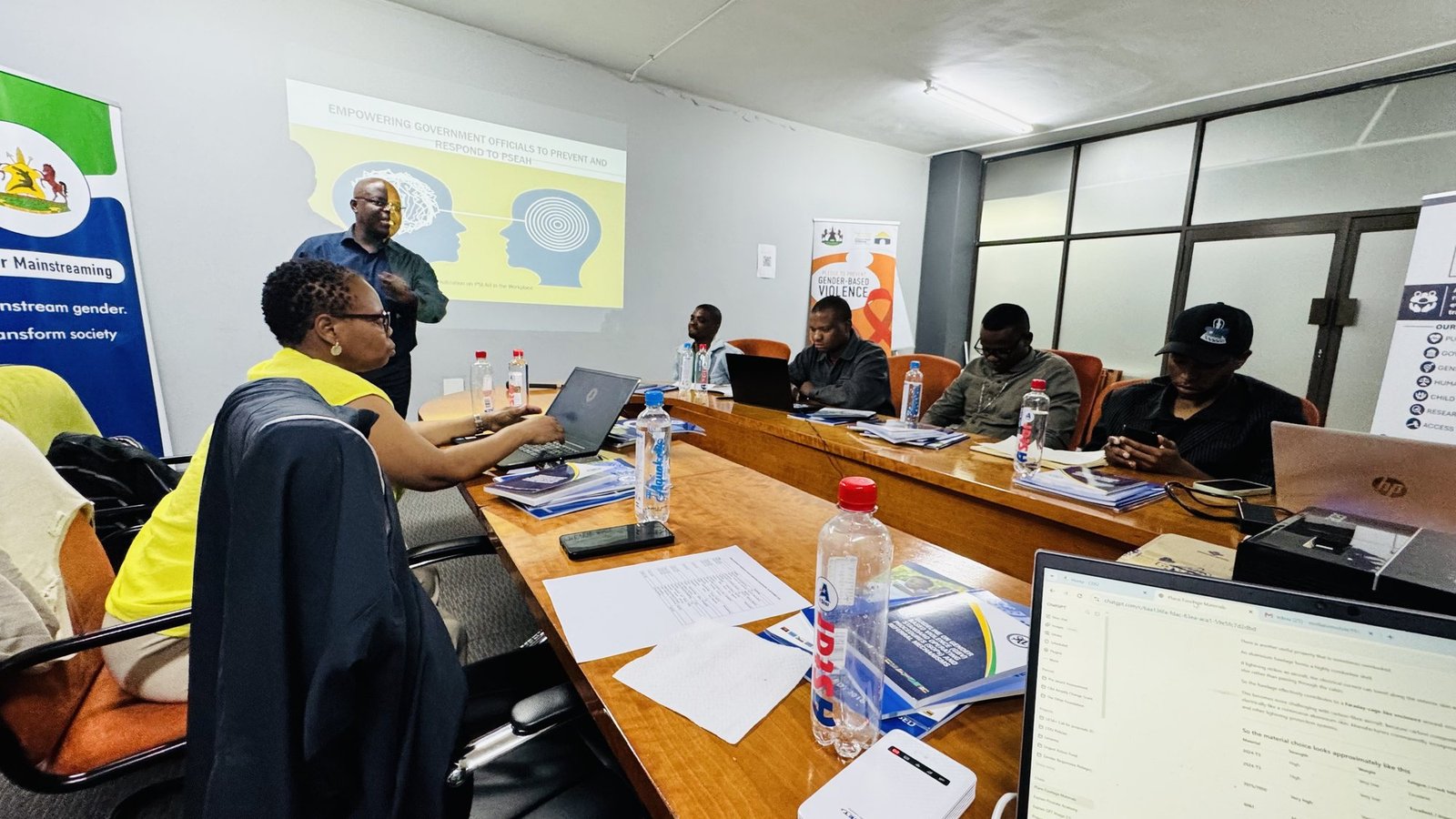
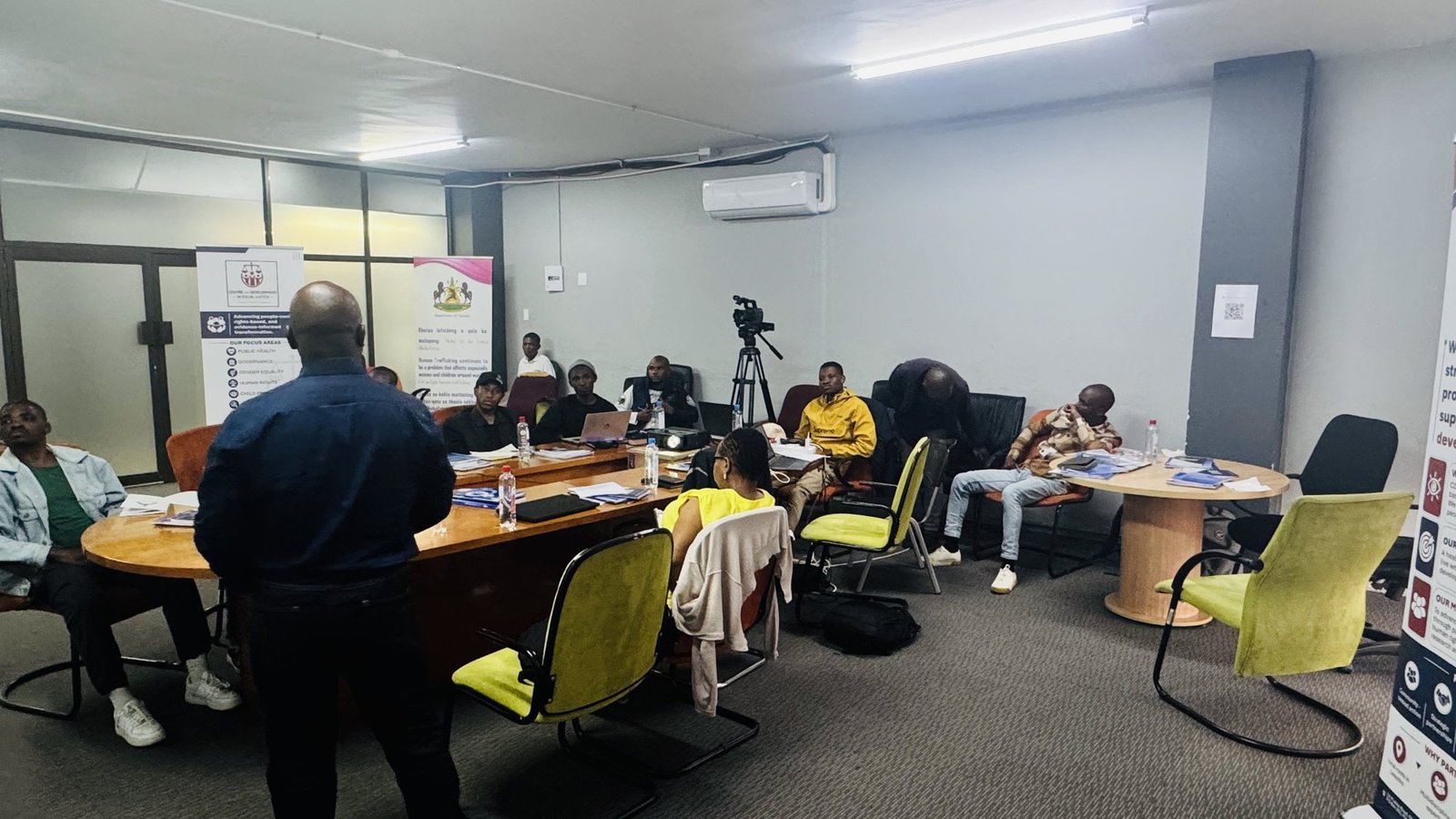
    A Ministry of Gender facilitator presenting to journalists during the gender and GBV workshop
    The programme built a common foundation in gender, GBV prevention and professional responsibility.
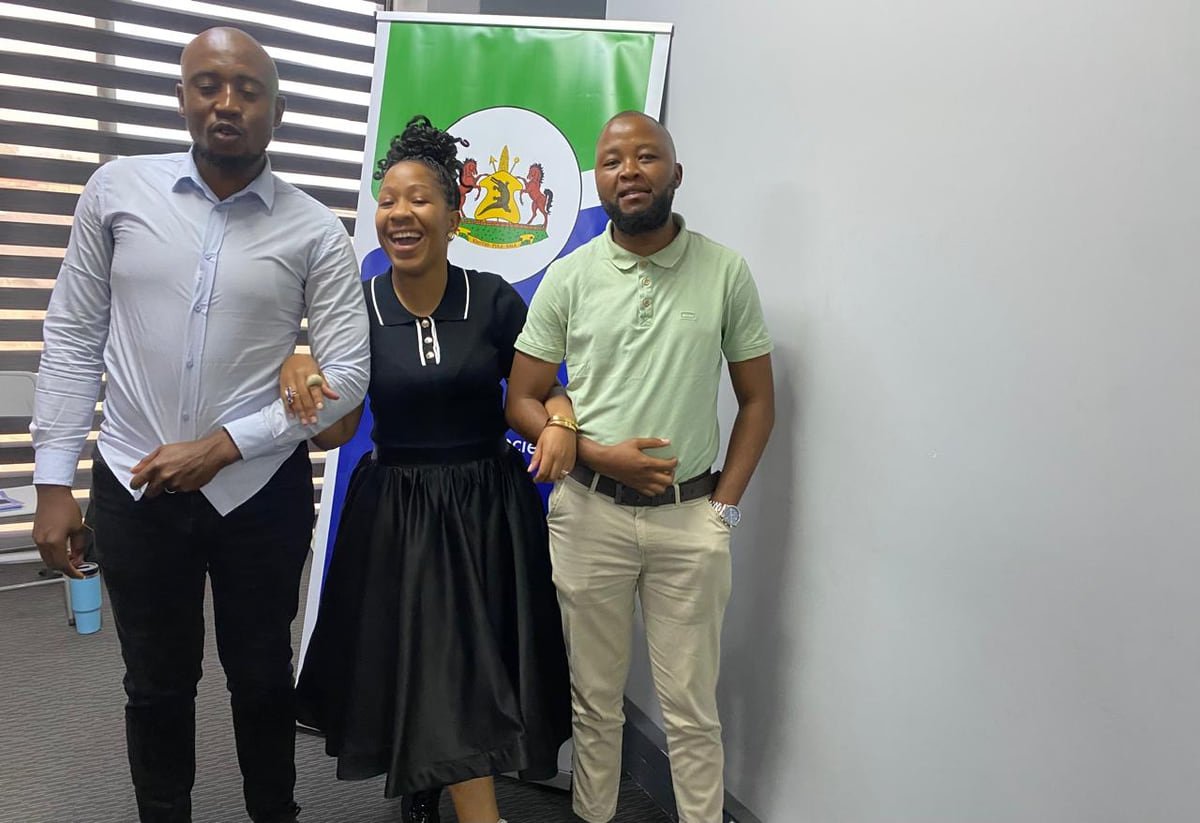
    Male journalists participating in the Ministry of Gender, MISA Lesotho and CDSJ training
    Participants examined how everyday editorial decisions can shape public attitudes and institutional accountability.

    Following public money through a gender and inclusion lens

    CDSJ’s Gender-Responsive Budgeting session began with a simple proposition: a public budget is not only an accounting document. It records choices about which problems receive attention, whose needs become priorities, how much Government commits and which institution must answer for the result.

    Participants worked through the distinctions between an allocation, a release, actual expenditure, an output and an outcome. These distinctions matter to journalism. Money approved in a budget may arrive late or only partly. Money spent does not by itself prove that a service reached the intended people. A facility counted as an output may still be inaccessible, unsafe, unreliable or too costly for some groups to use.

    “An amount is the beginning of the story. The public-interest story explains the choice, the delivery and the result.”Core message from CDSJ’s Gender-Responsive Budgeting session

    The session clarified that Gender-Responsive Budgeting does not mean creating a separate budget for women or dividing every allocation equally. It means examining how revenue and expenditure affect people differently, identifying unequal barriers and starting conditions, funding the activities needed to address those barriers, and changing plans when evidence shows that results remain unfair.

    From national announcement to community experience

    Journalists were encouraged to follow a public promise through the full budget cycle. This means asking who helped define the need, what Parliament approved, what Government released, where procurement and implementation took place, whether the service functions, and who can practically use and benefit from it.

    Six GESI domains for stronger reporting

    CDSJ introduced six Gender Equality and Social Inclusion domains that help journalists identify where exclusion can enter a policy, programme or budget. Each domain links community experience to a decision, institution, standard or budget line that can be investigated.

    Laws and institutional practiceWhether rules, eligibility criteria, standards and complaints systems include people fairly and assign clear responsibility.
    Access to and control over resourcesWhether distance, fees, disability access, information, opening hours or decision-making power prevent practical use.
    Beliefs and social normsWhether public decisions challenge or reinforce assumptions about gender roles, leadership, work and entitlement.
    Power and decision-makingWho defined the problem, selected beneficiaries, chose the location and had enough information to influence the result.
    Roles, responsibilities and timeHow paid work, unpaid care, farming, schooling and transport affect participation and access to services.
    Dignity, safety and wellbeingWhether privacy, safeguarding, accessibility and freedom from violence or stigma are treated as real programme costs.

    Intersectionality formed part of this analysis. Women, men and young people do not experience public services as uniform groups. Gender combines with age, disability, income, location, family status and other circumstances. A gender-responsive story therefore compares different lived experiences and traces each barrier to the responsible decision-maker and public provision.
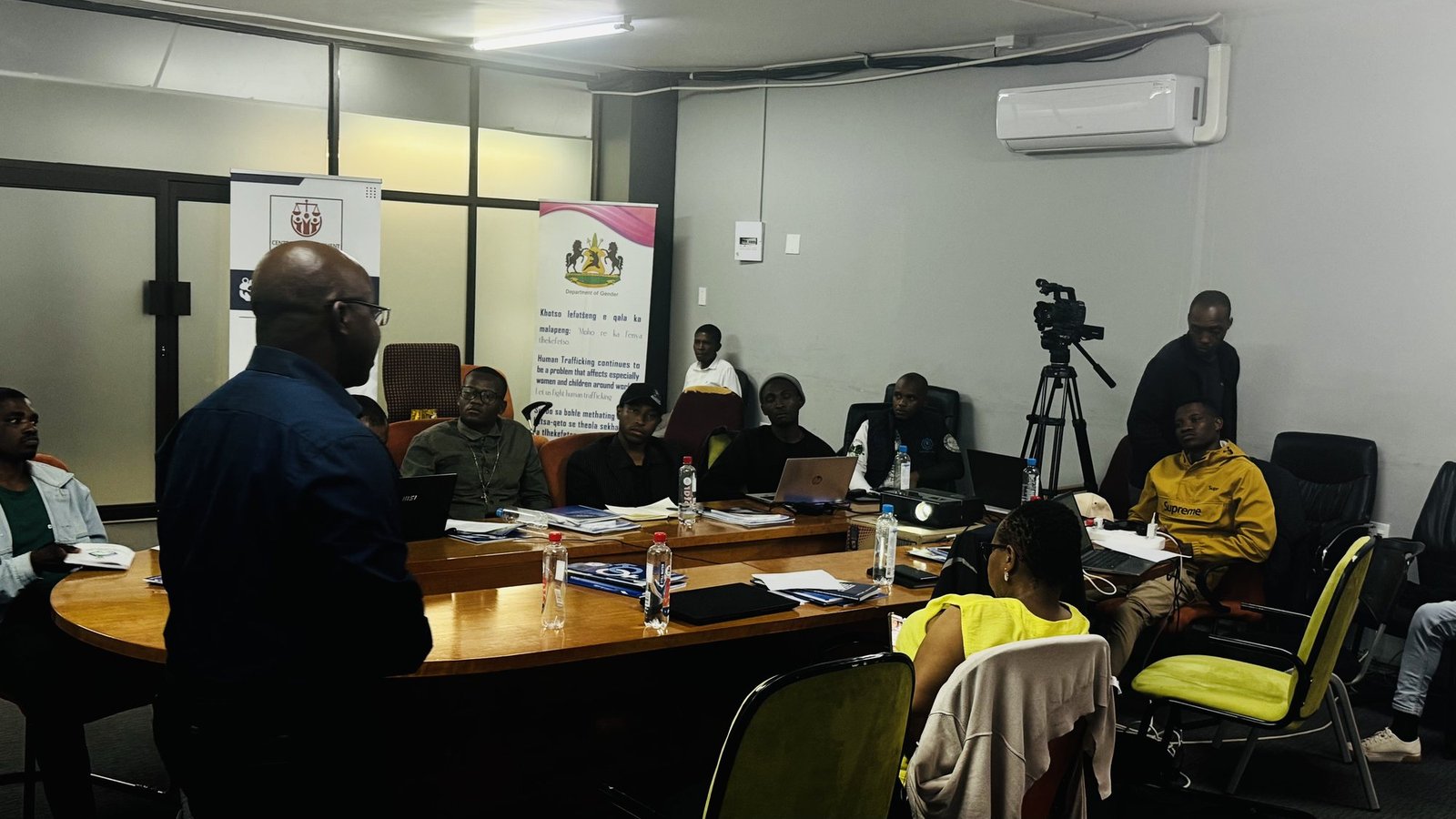
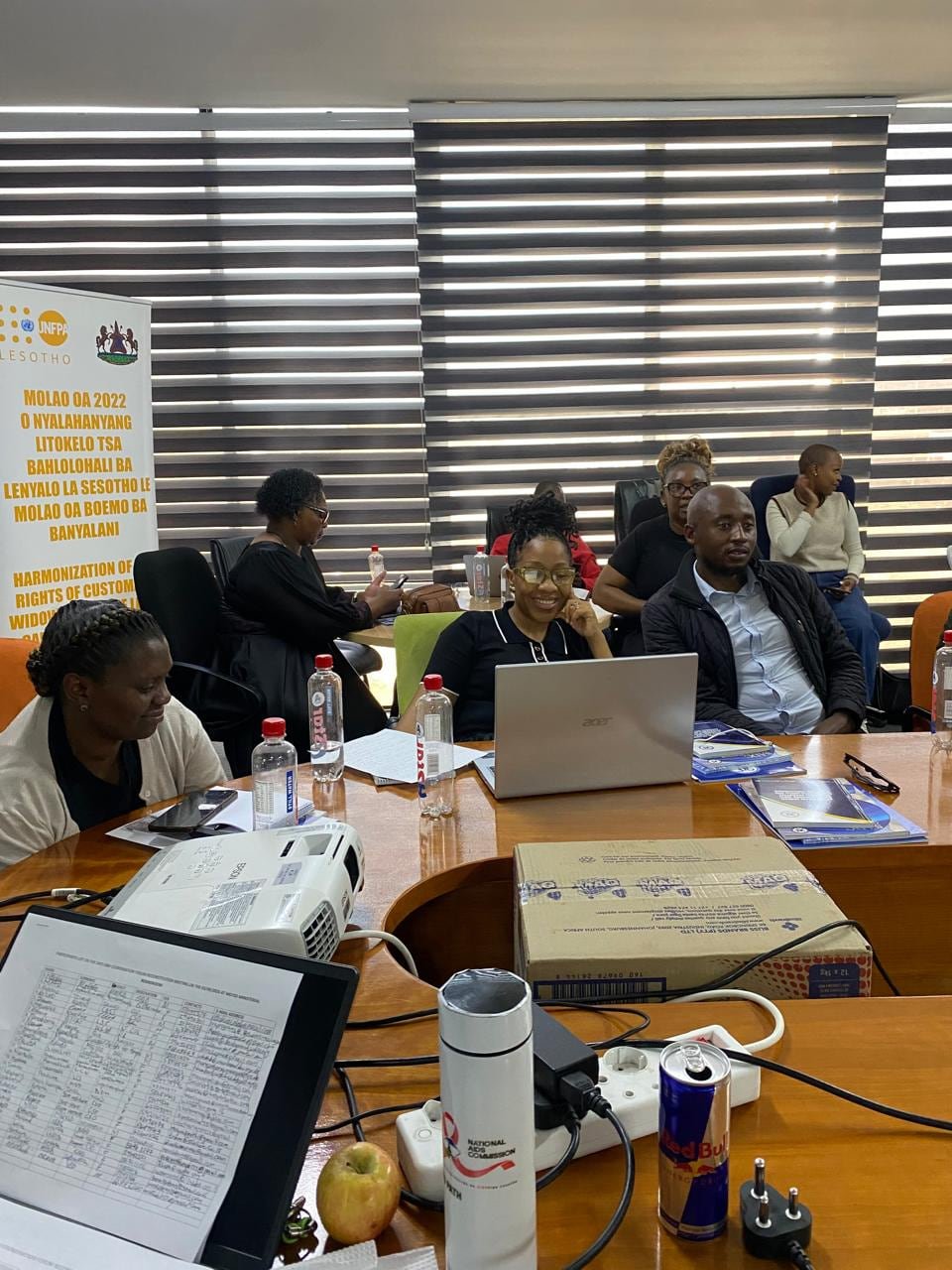
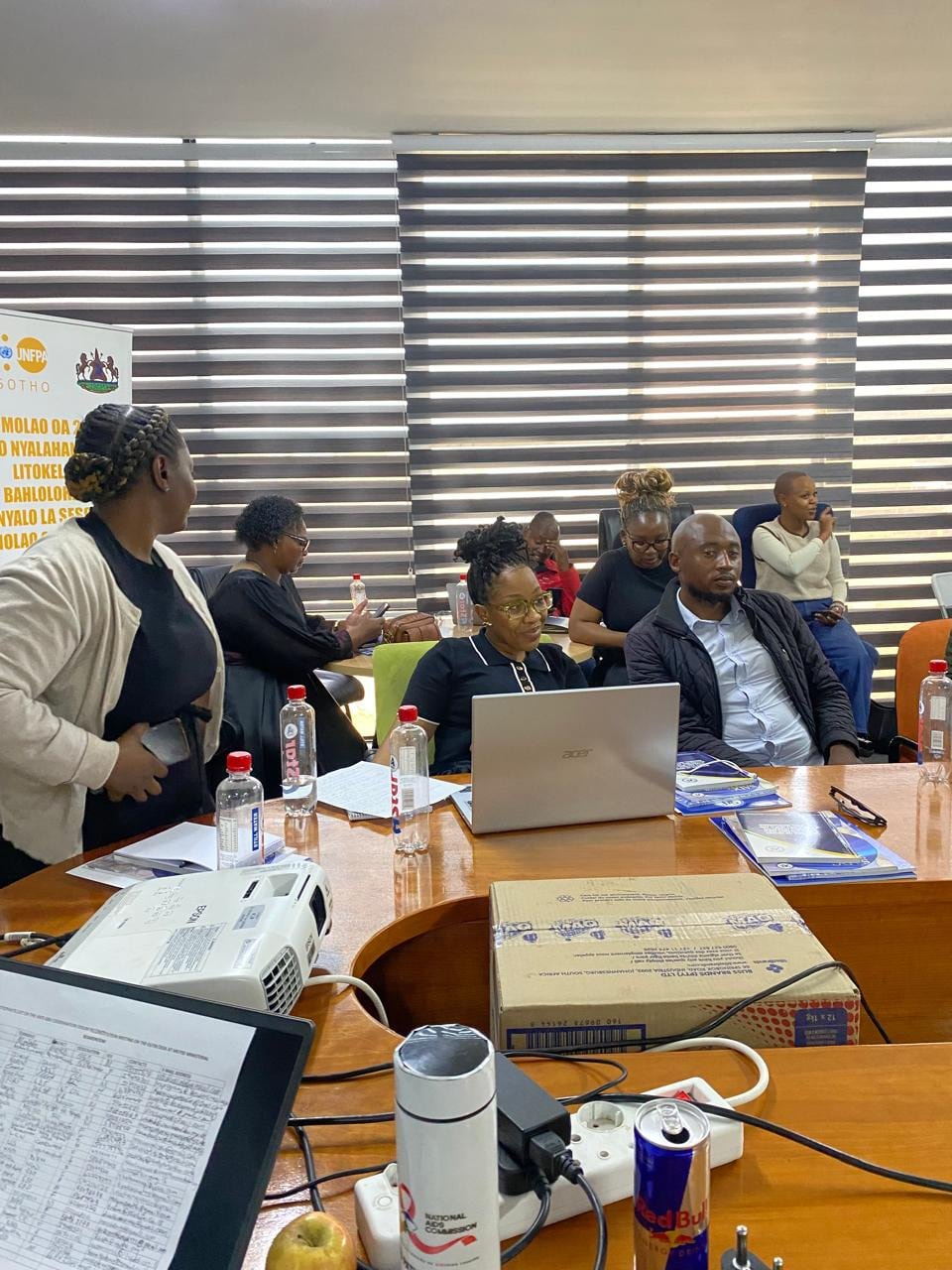
    CDSJ engaging journalists on public budgets, gender equality and social inclusion
    The practical discussion showed how a reporter can connect a community experience to public records, responsible institutions and measurable results.

    What gender-responsive reporting requires

    The training connected budget analysis with newsroom practice. Responsible reporting requires journalists to protect the dignity and privacy of survivors, avoid sensational language and images, seek informed consent, use gender-disaggregated evidence where it exists, and state clearly when important information remains unavailable.

    For budget stories, this also means going beyond the national announcement. A complete investigation compares the stated need with the approved amount, tracks releases and spending, examines geographic distribution and procurement, tests whether a service is safe and functional, and asks which groups gained most or least from the final result.

    Ten checks before publishing a GRB story

    1. Cite the correct year, document and amount.
    2. Separate what was approved, released, spent and delivered.
    3. Name the public problem and the responsible institution.
    4. Identify the intended groups and intersecting barriers.
    5. Apply the six GESI domains.
    6. Request disaggregated and geographic data.
    7. Compare selection criteria with actual beneficiaries.
    8. Include diverse affected voices safely and with consent.
    9. Measure functionality, quality, maintenance and outcomes.
    10. State evidence gaps and avoid assumptions or stereotypes.

    Building continued collaboration between the gender sector and the media

    The value of the workshop lies in continued application. Participants can take the concepts into routine reporting on violence, health, education, local government, water, agriculture, justice, public finance and other sectors. Gender-responsive journalism should not appear only during commemorative campaigns. It belongs in daily decisions about whose voice is heard, which evidence is tested and whether public commitments produce fair results.

    Continued collaboration between the Ministry, MISA Lesotho, CDSJ and media professionals can support future learning, responsible referral practices, better access to subject expertise and stronger public-interest reporting. Follow-up also creates an opportunity to see how participants apply the training in stories and how editorial practice changes over time.

    CDSJ’s perspective: accountable journalism strengthens gender justice

    CDSJ appreciates the Ministry of Gender’s leadership in convening the workshop and MISA Lesotho’s partnership in connecting gender knowledge with newsroom practice. Media professionals shape how people understand violence, public institutions and the choices Government makes with public resources.

    For CDSJ, gender-responsive reporting combines accuracy with dignity and accountability. It protects people from further harm, questions stereotypes instead of repeating them, and follows public promises until citizens can see who benefited, who remained excluded and what must change.

    This work strengthens both gender justice and democratic accountability in Lesotho. When journalists follow the money, find the people affected and test the result, they help communities and institutions move from announcements to evidence and from stated commitments to fair outcomes.
    Follow CDSJ’s work on gender equality, accountable governance and public-interest communication.
    More News & EventsSubscribe for Updates
  • CDSJ Engages Mapoteng Youth on GBV Prevention and Gender Equality

    CDSJ Engages Mapoteng Youth on GBV Prevention and Gender Equality

    CDSJ supported a Ministry of Gender youth engagement initiative at Dahon High School in Mapoteng, delivering an interactive session on gender-based violence prevention, the role of men and boys, gender equality and meaningful youth participation.

    Date5 September 2026
    LocationDahon High School, Mapoteng
    PartnerMinistry of Gender

    On 5 September 2026, the Centre for Development in Social Justice (CDSJ) joined the Ministry of Gender in a youth engagement initiative held at Dahon High School in Mapoteng. The gathering created a space for young people to examine how gender norms, unequal power and silence around violence affect their lives, their relationships and the communities in which they are growing up.

    CDSJ’s contribution, delivered by Adv. Motlatsi J. Mofolo, connected two issues that are often discussed separately. The first was how men and boys can become accountable partners in preventing gender-based violence (GBV). The second was how young people can participate meaningfully in gender-equality decisions rather than being invited only after programmes and priorities have already been decided.

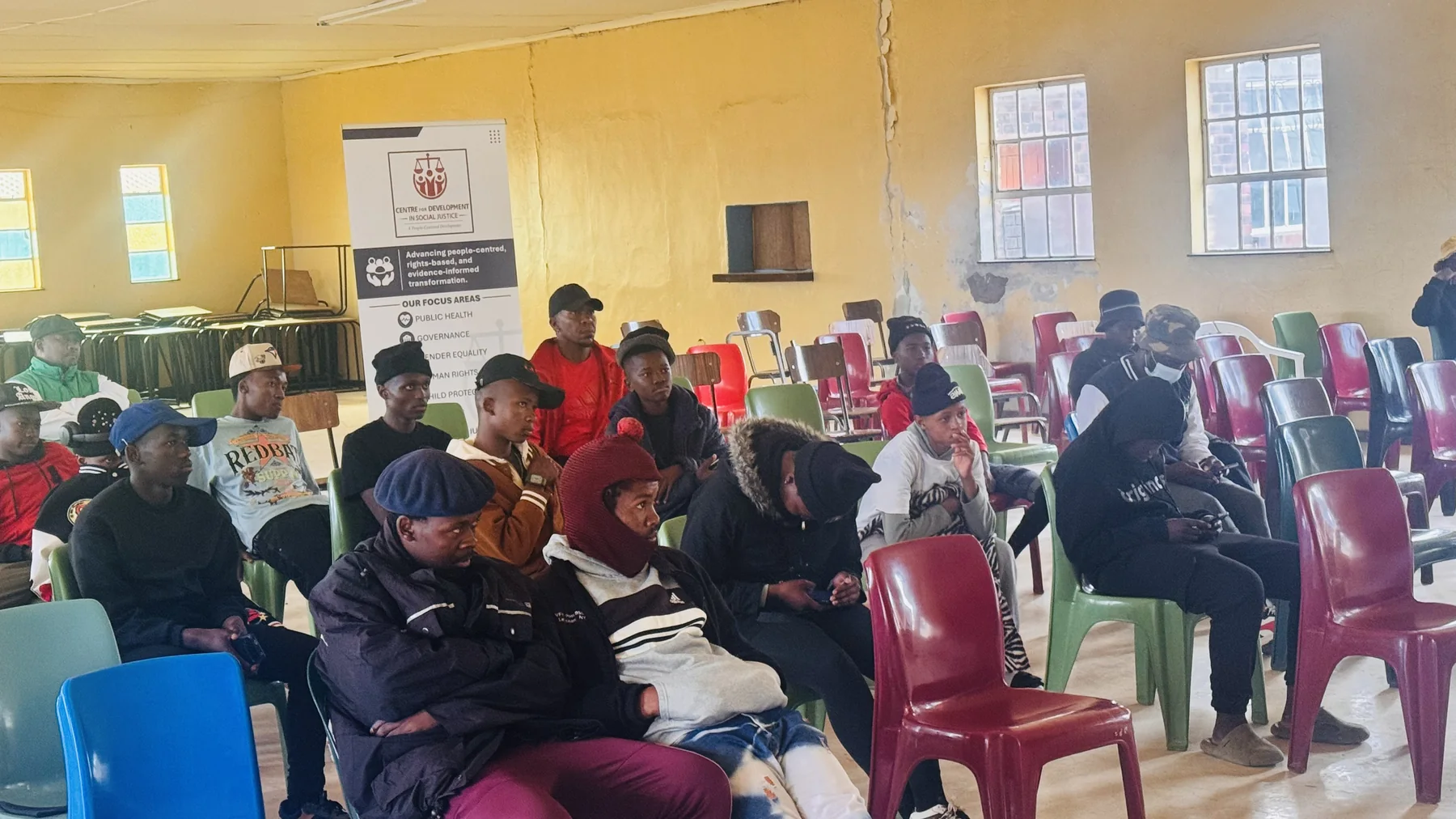
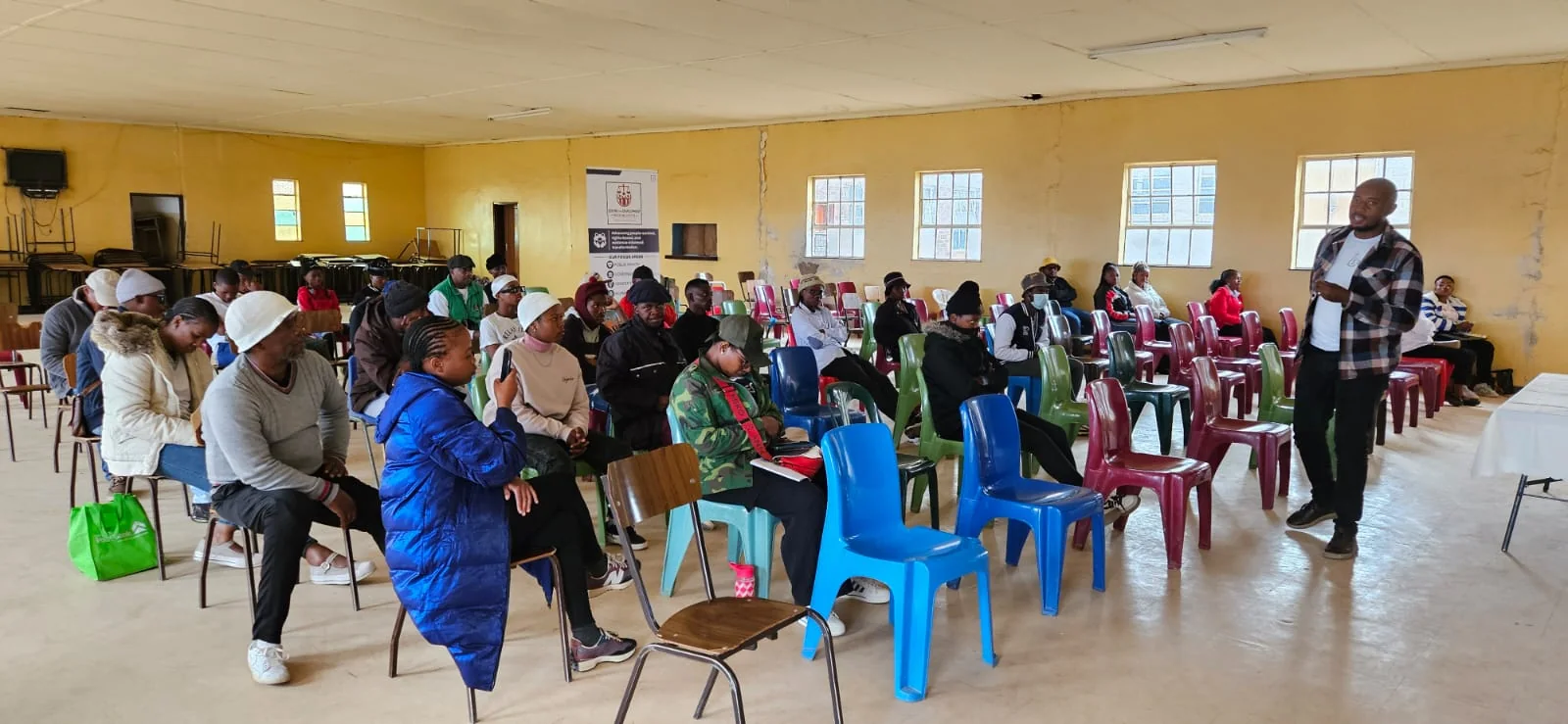
    Youth participants and facilitators at the Ministry of Gender engagement supported by CDSJ in Mapoteng
    The Ministry of Gender youth engagement at Dahon High School brought young people together for discussion, reflection and participatory learning.

    Why prevention must begin before harm occurs

    The presentation placed the discussion within Lesotho’s wider gender and demographic context. It emphasised that GBV cannot be treated only as an individual act or as a private matter that institutions address after violence has already occurred. Violence is also shaped by everyday expectations within families, peer groups, schools, community structures, workplaces and digital spaces.

    44.1%Women aged 15–49 reported as having experienced physical or sexual violence since age 15.
    36%Women reported as having experienced violence by a husband or intimate partner.
    29%Basotho are aged 10–24, illustrating why youth voice belongs at the centre of prevention.

    These figures, presented from UNFPA and UNICEF materials referenced in the session, reinforce the need for prevention that changes the conditions in which violence becomes normalised or concealed. In a country where more than 60 per cent of the population is under 35, youth participation must form part of the prevention system rather than remain a small supporting activity.

    “Ho thibela tlhekefetso ke mosebetsi oa sechaba sohle, empa o qala ka boikarabello ba motho ka mong.”
    Preventing violence is a responsibility shared by the whole community, and it begins with individual accountability.

    Men and boys as accountable prevention partners

    The session challenged the idea that work with men and boys simply means adding male participants to a meeting. Meaningful engagement must produce changes in attitudes, behaviour, power relations and accountability. Men and boys should participate as people with their own duty to reject violence, coercion, entitlement and harmful peer pressure.

    Accountability without displacing women’s leadership

    Engaging men and boys should never excuse perpetrators, dilute women’s leadership or make men the centre of GBV work. It should create honest spaces in which boys and men can question harmful ideas about masculinity, practise respectful relationships and challenge one another when silence protects abuse.

    Participants considered some of the conditions that men and boys can help change: social expectations that equate masculinity with control or aggression; the protection of offenders in the name of family or community reputation; economic and relationship power used to limit another person’s choices; online harassment and image-based abuse; sexist jokes and coercive behaviour that are dismissed until harm escalates; and peer pressure that rewards dominance.

    The presentation proposed a practical pathway that can be adapted to schools and other community spaces:

    1. ReachWork in the spaces where men and boys already gather.
    2. ReflectDiscuss masculinity, power, consent and peer pressure honestly.
    3. CommitAgree on clear conduct, including no violence, coercion or cover-up.
    4. ActSupport respectful relationships, referrals and community action.
    5. AccountTrack behaviour, challenge repeat harm and report back.

    Young people listening during the CDSJ-supported gender equality session in Mapoteng
    Youth participants following the discussion on GBV prevention, gender equality and personal accountability.
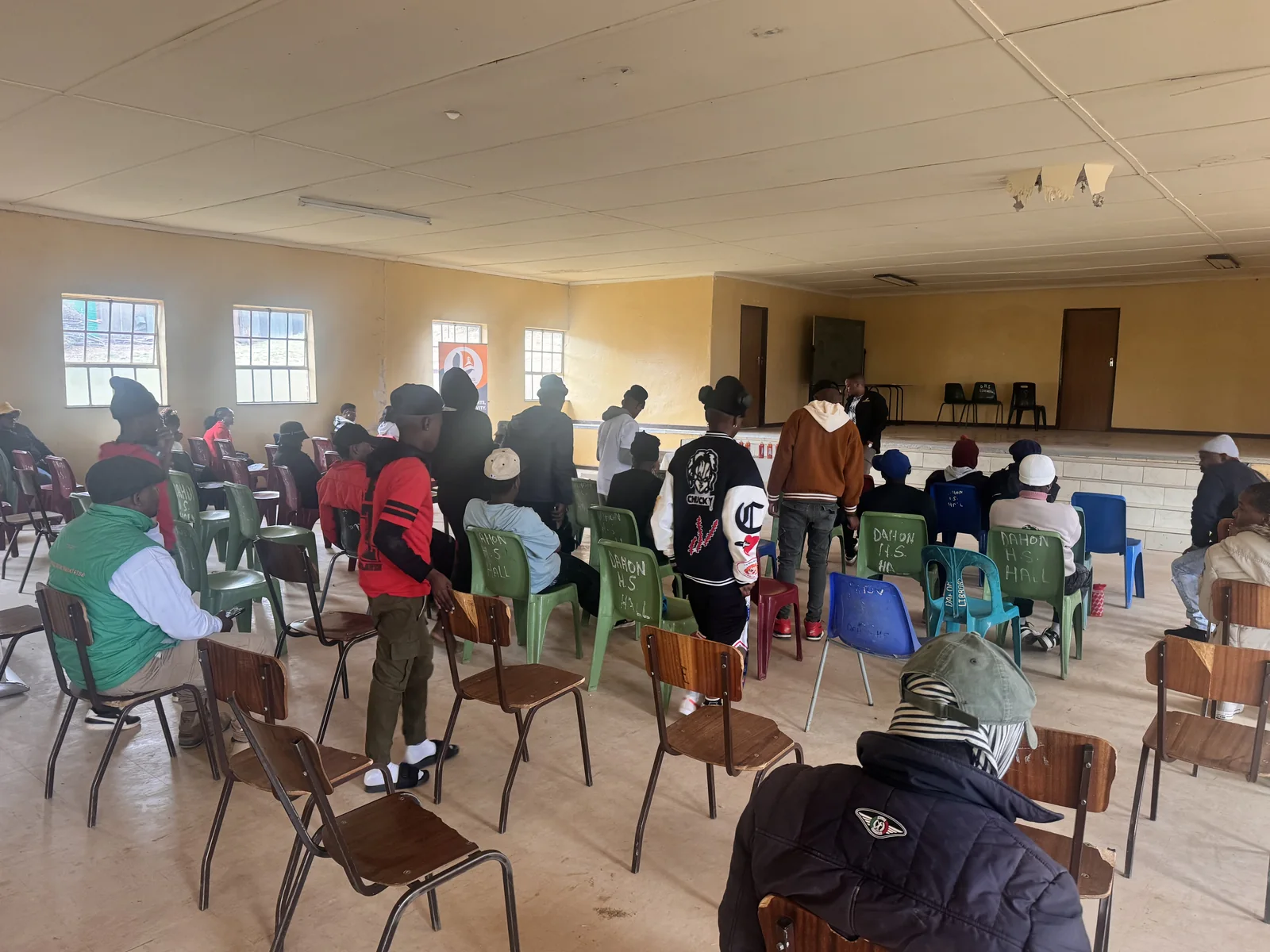
    Young people taking part in a participatory session at Dahon High School
    Participation during the engagement helped move the session beyond a one-way presentation.

    From youth attendance to youth influence

    The second part of CDSJ’s intervention asked a direct question: how much influence do young people actually have over decisions that affect their safety, dignity and future? A room may contain many young people while still leaving all important decisions in adult hands.

    The presentation described a participation ladder that begins with decoration, where youth are invited for numbers, entertainment or photographs but have no influence. Consultation allows young people to express views, although adults may still make decisions without reporting back. Collaboration gives youth a role in shaping activities, messages and monitoring. Co-leadership shares authority and implementation responsibility. Youth-led change enables young people to identify concerns, organise action, engage duty-bearers and remain accountable to their own constituencies.

    What meaningful participation requires

    Young people need safe and continuous ways to contribute. Programmes should involve them when problems are defined, when solutions are designed and when results are reviewed. Participation also requires practical support such as safe venues, accessible information, transport or data where needed, clear safeguarding arrangements and feedback on what decision-makers accepted, rejected or funded.

    The discussion also recognised barriers that can exclude young people even when an invitation exists. Adults may dismiss youth as inexperienced. Girls and young women may face stigma, care responsibilities or safety risks when they speak. Costs, disability access, timing and language can quietly keep some voices out. Young participants may also fear retaliation at home, at school or online if they speak openly about violence or discrimination.

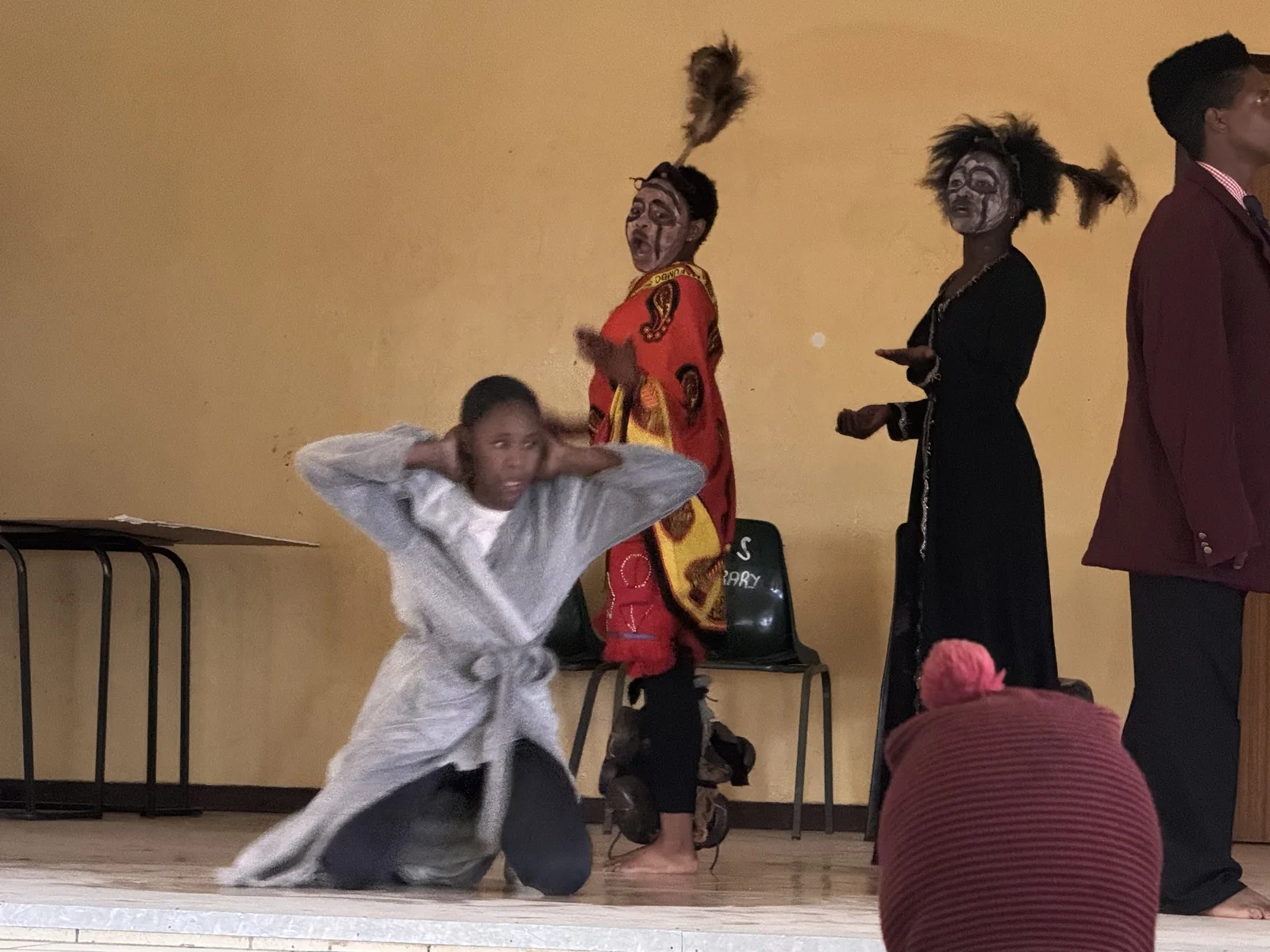
    Young performers contributing to the youth engagement programme at Dahon High School
    Creative performance formed part of the wider youth engagement programme at Dahon High School.

    Turning discussion into practical commitments

    The session concluded with a simple framework for moving from discussion to action over a 90-day period. During the first 30 days, participants and institutions can identify the spaces where men, boys and youth should be engaged, the people who can open those spaces, and the safeguarding and referral arrangements that must be in place.

    During days 31–60, structured dialogues can be held and young people can help shape prevention messages, school or community outreach, digital-safety content and reporting pathways. During days 61–90, participants can review whether the quality of youth participation improved, whether harmful norms were challenged, whether referral pathways were used appropriately and whether public commitments were honoured.

    This framework does not assume that a single engagement can transform behaviour. A first dialogue can open the door, but prevention requires repeated practice, visible accountability and institutions that continue listening after an event has ended.

    CDSJ’s perspective: youth voice belongs inside the prevention system

    CDSJ appreciates the Ministry of Gender’s initiative and the opportunity to contribute to youth engagement in Mapoteng. Work to prevent GBV gains strength when it reaches young people before harmful expectations about gender, power and relationships become deeply established.

    Engaging men and boys carries a clear purpose: to build accountability among those who can interrupt harmful peer norms, reject silence and support respectful relationships without displacing the leadership of women and girls. Meaningful youth participation carries an equally clear purpose: to ensure that young people help shape the decisions, services and community responses that affect their lives.

    For CDSJ, the measure of a successful youth engagement is not attendance alone. The deeper test is whether young people leave with clearer knowledge, whether institutions create safe routes for their continued participation, and whether commitments lead to changes that can be seen in homes, schools, community spaces and public decision-making.

    Follow CDSJ’s work on gender equality, human rights and youth participation.
    More News & Events
    Subscribe for Updates
  • Strengthening Lesotho’s Coordinated Response to GBV: CDSJ Participates in Anti-GBV Coordination Forum Reconstitution Meeting

    Strengthening Lesotho’s Coordinated Response to GBV: CDSJ Participates in Anti-GBV Coordination Forum Reconstitution Meeting

    CDSJ joined government, justice-sector institutions and civil-society partners at a Ministry of Gender-convened meeting to reconstitute Lesotho’s Anti-GBV Coordination Forum and strengthen a coordinated, survivor-centred national response.

    Date3 September 2026
    Convened byMinistry of Gender
    FocusNational GBV coordination

    On 3 September 2026, the Centre for Development in Social Justice (CDSJ) joined government institutions, justice-sector actors and civil-society organisations for the reconstitution of Lesotho’s Anti-Gender-Based Violence Coordination Forum. The meeting was called and convened by the Ministry of Gender as part of efforts to create a stronger, more coherent national mechanism for preventing and responding to gender-based violence (GBV).

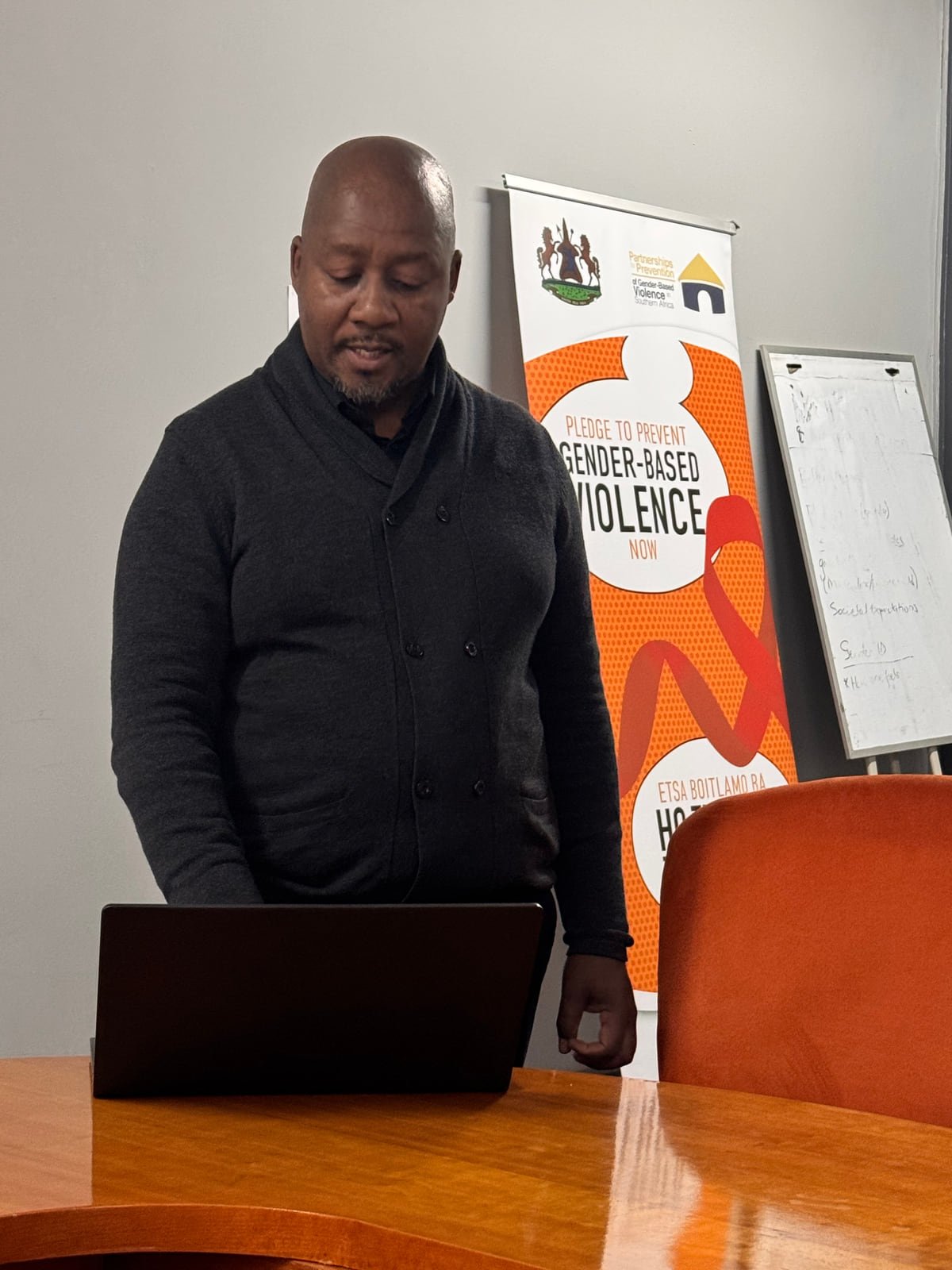
    Mr. Ntheka Matobo of the Ministry of Gender delivered the welcome remarks. Dr. Mosiuoa Ramakoele led the presentation on the Coordination Forum, guiding participants through its history, intended purpose, proposed structure and the responsibilities required to make it operational and sustainable.

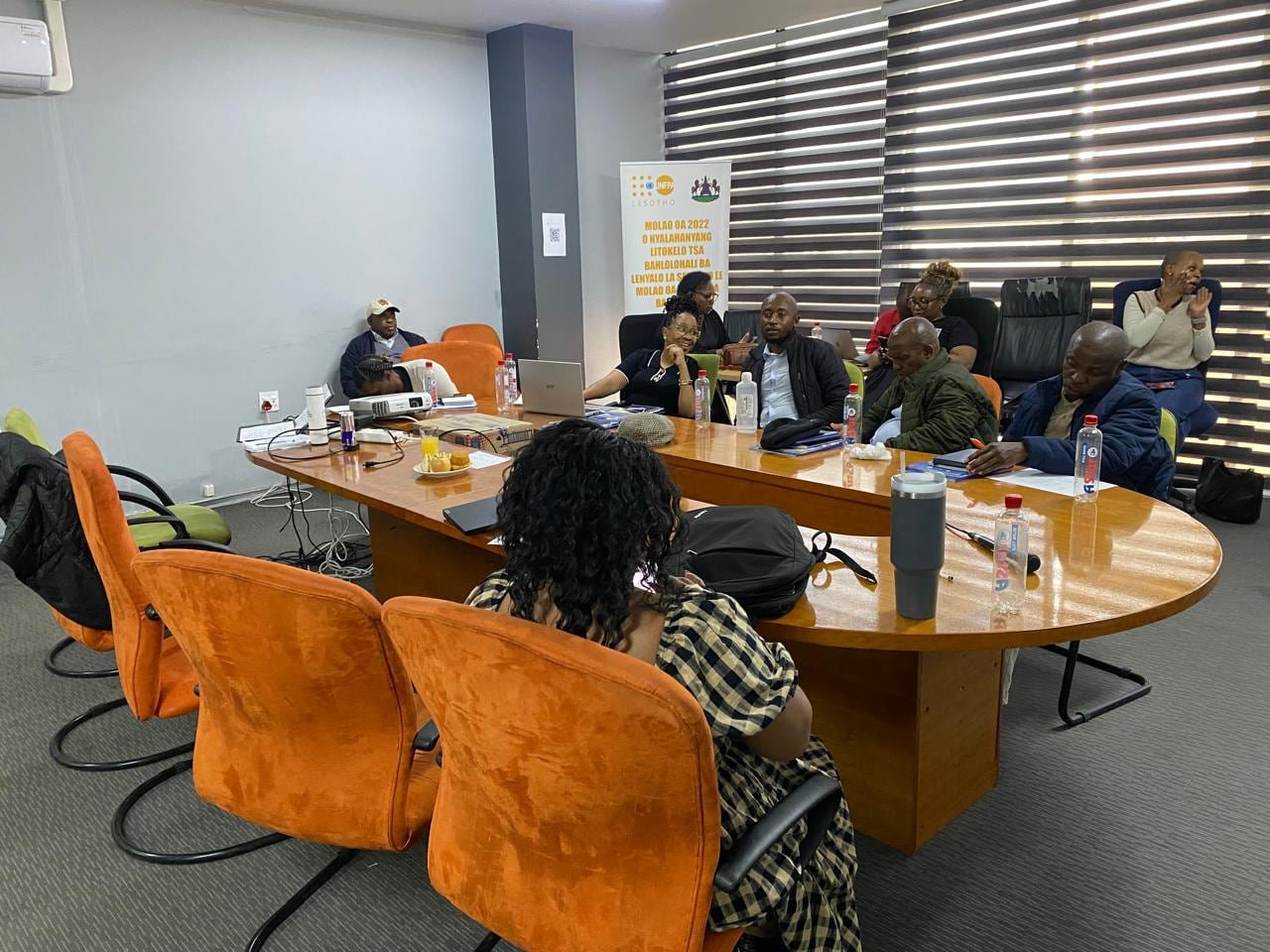
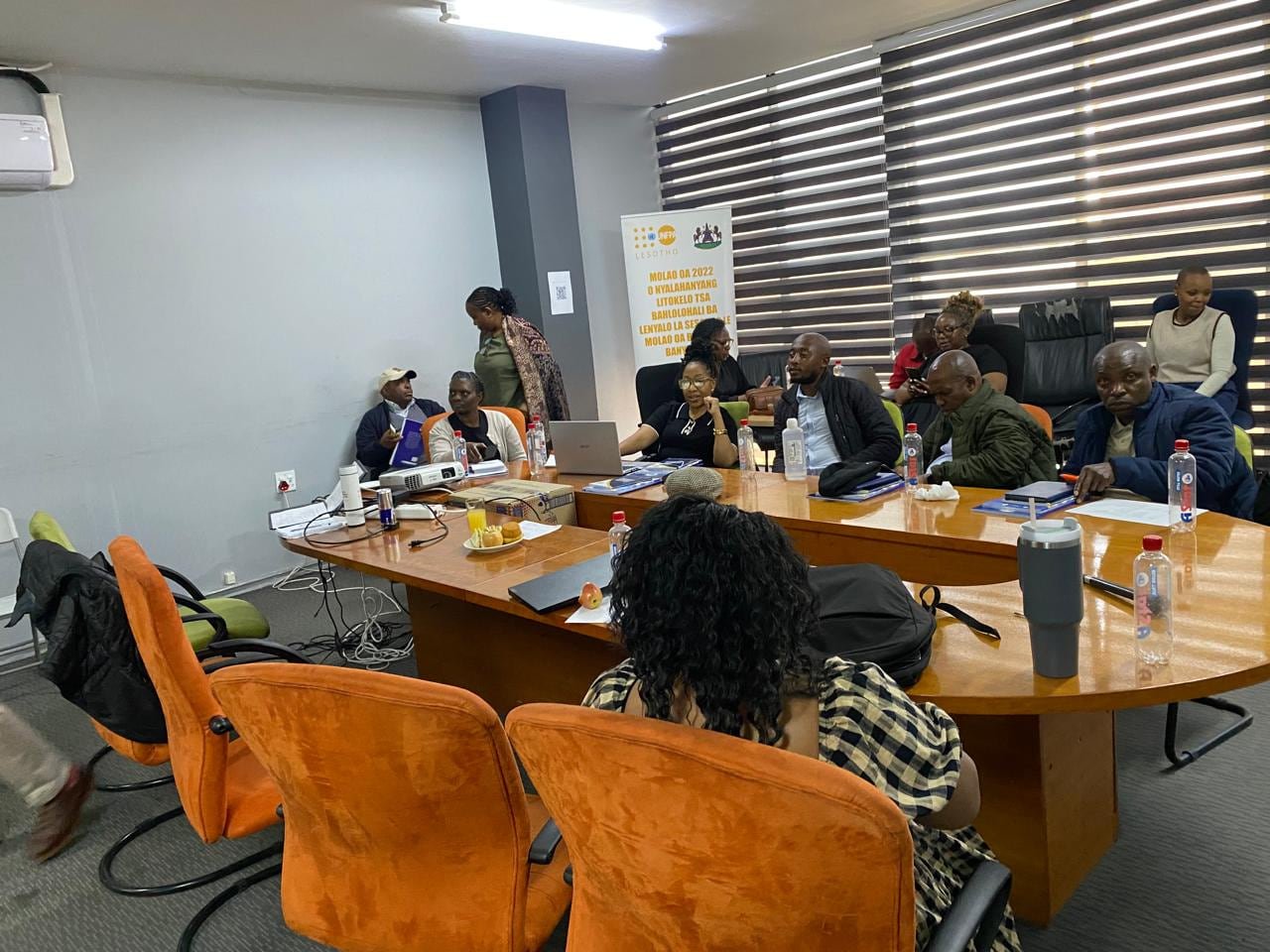
    Government and civil-society participants at the Anti-GBV Coordination Forum meeting
    Government, justice-sector and civil-society representatives participating in the Anti-GBV Coordination Forum Reconstitution Meeting.

    Rebuilding a national coordination mechanism

    The presentation situated the Forum within a longer national process. It traced the call for an Anti-GBV coordination mechanism to the 2013 GBV Indicator Study, followed by the establishment of the Forum in 2019. The Forum was described as having entered a period of dormancy between 2021 and 2024, before reactivation efforts began in 2025 and the current reconstitution process was undertaken in 2026.

    Why coordination matters

    Survivors often encounter several systems—including health services, the police, courts, correctional services, social-development structures and community organisations. When these systems work in isolation, referrals can break down, responsibilities can become unclear and important cases can fall through institutional gaps.

    The meeting therefore focused on rebuilding a Forum capable of providing a common framework for GBV prevention and response, reducing duplication among stakeholders, strengthening cooperation, supporting evidence-informed action and improving coordination at both national and district levels.

    Presentation during the Anti-GBV Coordination Forum Reconstitution Meeting
    A presentation during the Anti-GBV Coordination Forum Reconstitution Meeting.
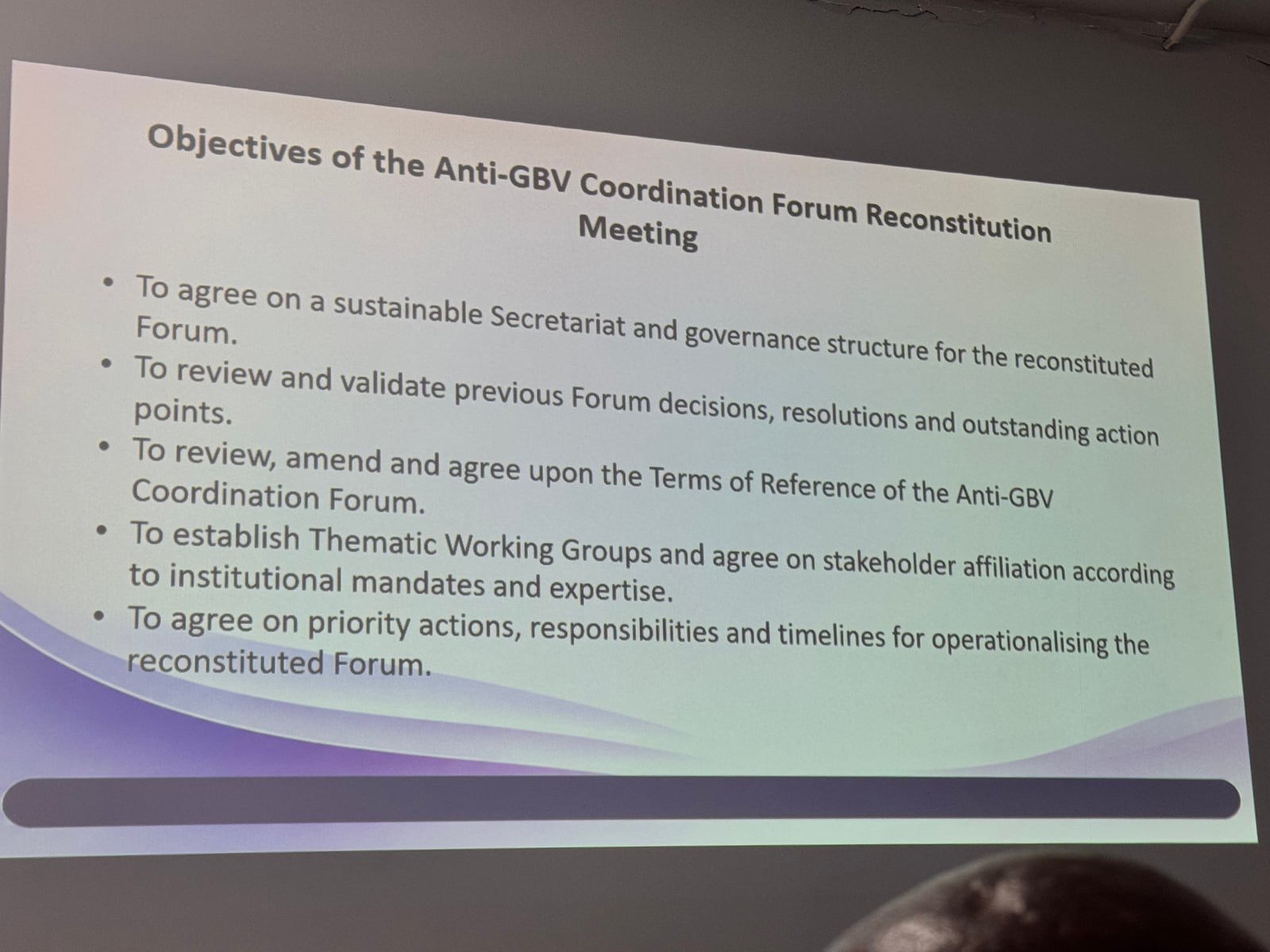
    Slide outlining objectives of the Anti-GBV Coordination Forum Reconstitution Meeting
    Meeting objectives included strengthening governance, reviewing earlier resolutions, refining the Terms of Reference and organising thematic working groups.

    From a Forum on paper to a working system

    The meeting’s objectives included agreeing on a sustainable secretariat and governance structure; reviewing decisions, resolutions and outstanding actions from earlier Forum meetings; reviewing and refining the Forum’s Terms of Reference; establishing thematic working groups; and identifying priority actions, responsibilities and timelines for implementation.

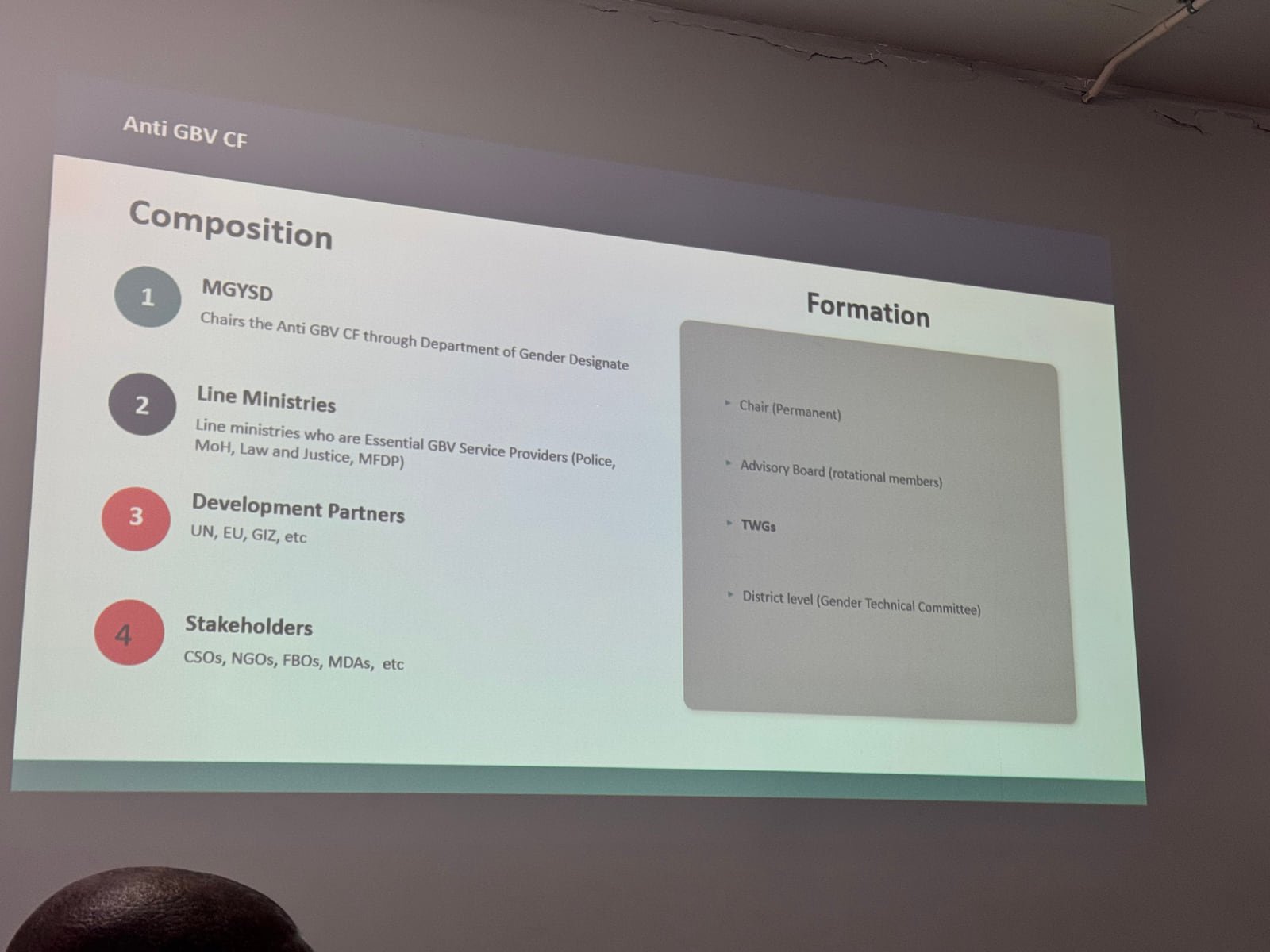
    Participants considered the Forum’s purpose, membership, representation, leadership arrangements and institutional responsibilities. The proposed composition brings together the Ministry responsible for Gender, relevant line ministries, development partners and civil-society stakeholders. The structure presented for discussion included a permanent chair, a rotating advisory board, thematic working groups and district-level Gender Technical Committees.

    Slide showing the proposed composition and structure of the Anti-GBV Coordination Forum
    The proposed Forum structure brings together government, relevant line ministries, development partners and civil-society stakeholders.

    The presentation also emphasised that leadership of the Forum should involve more than convening meetings. Its responsibilities should include aligning Forum activities with national GBV policies and strategies, following up on decisions, facilitating information sharing and joint planning, promoting survivor-centred and rights-based advocacy, strengthening referral systems and maintaining regular reporting.

    Turning discussion into accountable follow-through

    The agenda was deliberately organised around continuity and implementation rather than beginning the process afresh. Participants received rapporteur reports from the previous two Anti-GBV Coordination Forum meetings, with attention to issues already discussed, decisions and resolutions taken, progress made and actions that remain outstanding. This provided a basis for testing the proposed Terms of Reference against earlier commitments and institutional experience.

    The second part of the meeting created space for questions, clarification and reflection on the draft Terms of Reference before participants considered which institutions could contribute to the proposed thematic working groups. The closing session focused on agreed actions, the institutions or people responsible, implementation timelines and arrangements for the next Forum meeting.

    This sequence is important because effective coordination depends on a visible chain from discussion to decision, from decision to assigned responsibility, and from responsibility to monitored action. Regular reporting and follow-up can help the Forum maintain momentum and ensure that commitments translate into practical improvements for survivors and communities.

    Gendered justice concerns must form part of the response

    A concern raised in the opening remarks

    The opening remarks drew attention to the gendered operation of the criminal justice system in pregnancy- and child-related cases involving women and girls. This intersects directly with CDSJ’s growing work on situations in which criminal responsibility can be applied in a one-sided manner, leaving women and girls to carry disproportionate legal and social consequences.

    For CDSJ, this discussion is significant because GBV coordination must address not only individual acts of violence but also institutional practices that may reproduce gender inequality. A survivor-centred and rights-based response requires careful attention to how laws are interpreted, how cases are investigated and prosecuted, whose conduct is scrutinised and whether women and girls can access justice without discrimination.

    Bringing this concern into a national coordination forum creates an important opportunity for justice institutions, government departments and civil-society organisations to examine gaps collectively and pursue responses that are both legally accountable and gender-responsive.

    Broad participation across sectors

    The meeting brought together representatives from CDSJ, Women and Law in Southern Africa (WLSA), Seinoli, Lesotho Correctional Services, the Ministry of Gender, the Lesotho Council of NGOs, Gender Links Lesotho, Help Lesotho, the Magistracy, Sesotho Media, the International Human Rights Lab and the Lesotho National Federation of Organisations of the Disabled (LNFOD).

    The breadth of participation reflected the cross-sectoral nature of GBV prevention and response. Government institutions bring statutory mandates and public-service responsibilities; justice actors influence protection, investigation and accountability; and civil-society organisations contribute community knowledge, specialised services, advocacy, monitoring and direct engagement with people affected by violence and discrimination.

    The participation of disability-rights and media organisations also gives the Forum an opportunity to strengthen accessibility and public communication. Effective coordination should make information, referral pathways and services understandable and reachable for people with different needs, while supporting responsible reporting that protects dignity and does not reinforce stigma.

    CDSJ’s perspective: an important opportunity for the sector

    CDSJ welcomes the Ministry of Gender’s initiative. The reconstitution of the Forum represents an important opportunity for Lesotho’s GBV sector to move from fragmented interventions towards shared direction, clearer responsibilities and stronger accountability.

    The value of the Forum will ultimately be measured by whether coordination produces real improvements: functioning referral pathways, timely institutional follow-up, effective thematic working groups, stronger district-level action and services that survivors can access with dignity and confidence.

    CDSJ also believes the Forum should create space to confront difficult structural concerns, including the gendered treatment of women and girls in criminal cases connected to pregnancy and child-related matters. Addressing these gaps requires government, justice institutions and civil society to examine how laws and institutional practices operate in people’s lives and to pursue reforms that are accountable, gender-responsive and grounded in human rights.

    CDSJ is ready to contribute community experience, evidence and rights-based analysis to this collective effort. A functional Forum can strengthen not only Lesotho’s response to GBV, but also the sector’s capacity to prevent violence and challenge the inequalities that sustain it.

    Follow CDSJ’s work on gender equality, human rights and access to justice.
    More News & Events
    Subscribe for Updates