Tag: Governance

  • CDSJ, Ministry of Gender and MISA Strengthen Gender-Responsive Journalism in Lesotho

    CDSJ, Ministry of Gender and MISA Strengthen Gender-Responsive Journalism in Lesotho

    The Centre for Development in Social Justice (CDSJ) partnered with the Ministry of Gender, Youth and Social Development and the Media Institute of Southern Africa (MISA) Lesotho to strengthen male journalists’ understanding of gender equality, gender-based violence and responsible public-interest reporting. CDSJ led the training contribution on Gender-Responsive Budgeting and its practical application to gender-responsive reporting.

    Date9 September 2026
    VenueMinistry of Gender, Maseru
    PartnersMinistry of Gender, MISA Lesotho and CDSJ

    The one-day Male Journalists’ Workshop on Gender, Gender-Based Violence and Responsible Media Reporting brought emerging and practising media professionals into a structured conversation about the influence journalism has on public understanding, social norms and accountability in Lesotho.

    The workshop responded to a practical concern: a reporter may cover a case of violence, a government programme or a national budget without recognising how gender roles, unequal power, disability, location, poverty and access to information shape the experience behind the headline. When these dimensions are missed, reporting can unintentionally reinforce stereotypes, blame survivors or present an official allocation as proof that a public problem has been solved.
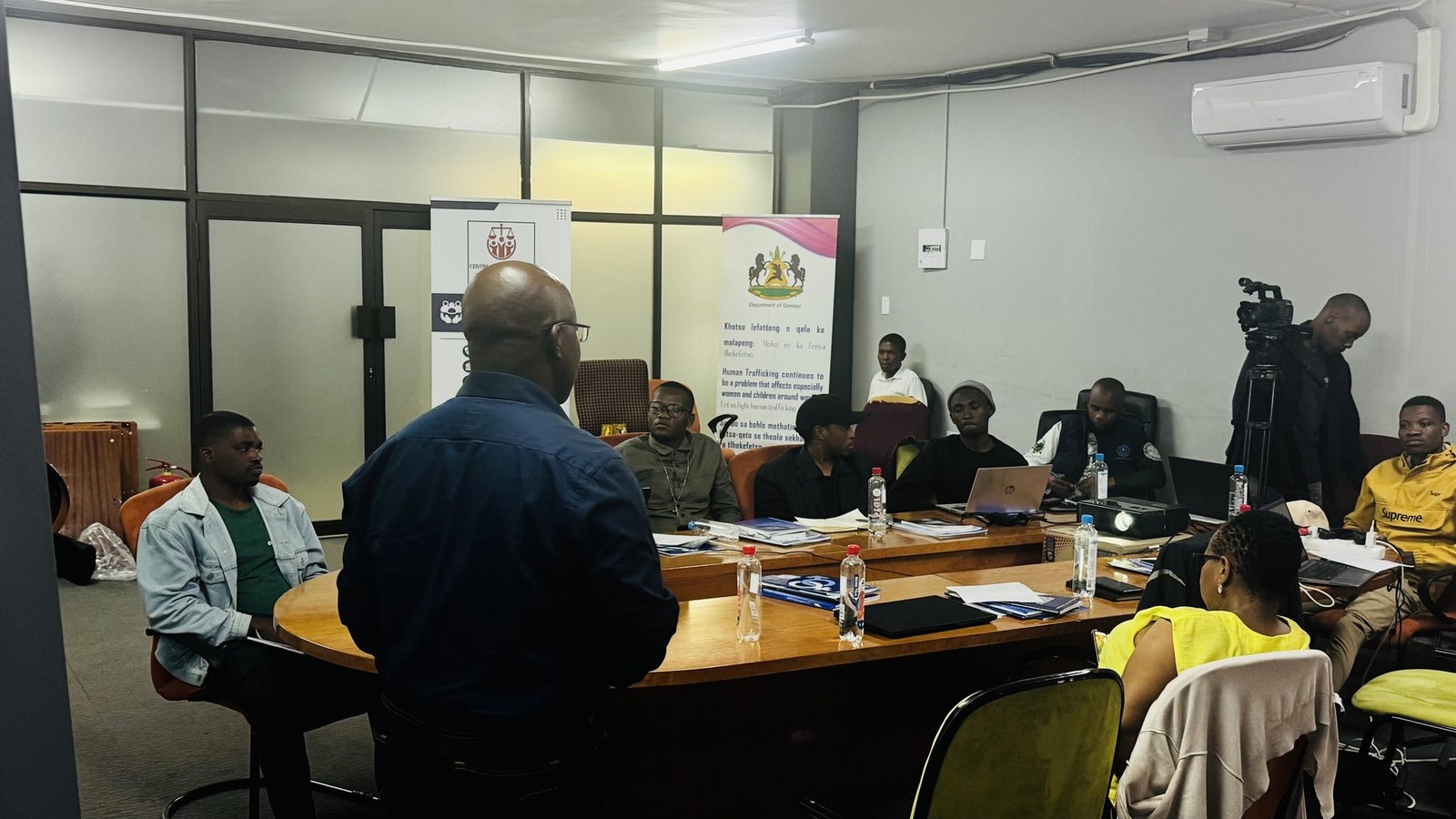
    CDSJ facilitator leading a Gender-Responsive Budgeting discussion with male journalists in Maseru
    CDSJ’s session connected public budgets with the lived realities journalists encounter in communities and public institutions.

    A shared investment in responsible journalism

    The Ministry of Gender convened the workshop as part of its work to strengthen gender mainstreaming, GBV prevention and coordination with the media. The programme introduced gender concepts, the forms and causes of GBV, positive masculinity, protection from sexual exploitation, abuse and harassment, and gender mainstreaming. It concluded with practical work on gender-responsive and ethical journalism, group reflection and participant commitments.

    This partnership recognised that journalists do more than record events. Choices about language, sources, images, headlines and context can either protect dignity and deepen public understanding or reproduce the same harmful norms that gender-equality work seeks to change. Male journalists therefore have an important role as informed reporters and as allies who can challenge victim-blaming, sensationalism and silence around violence.
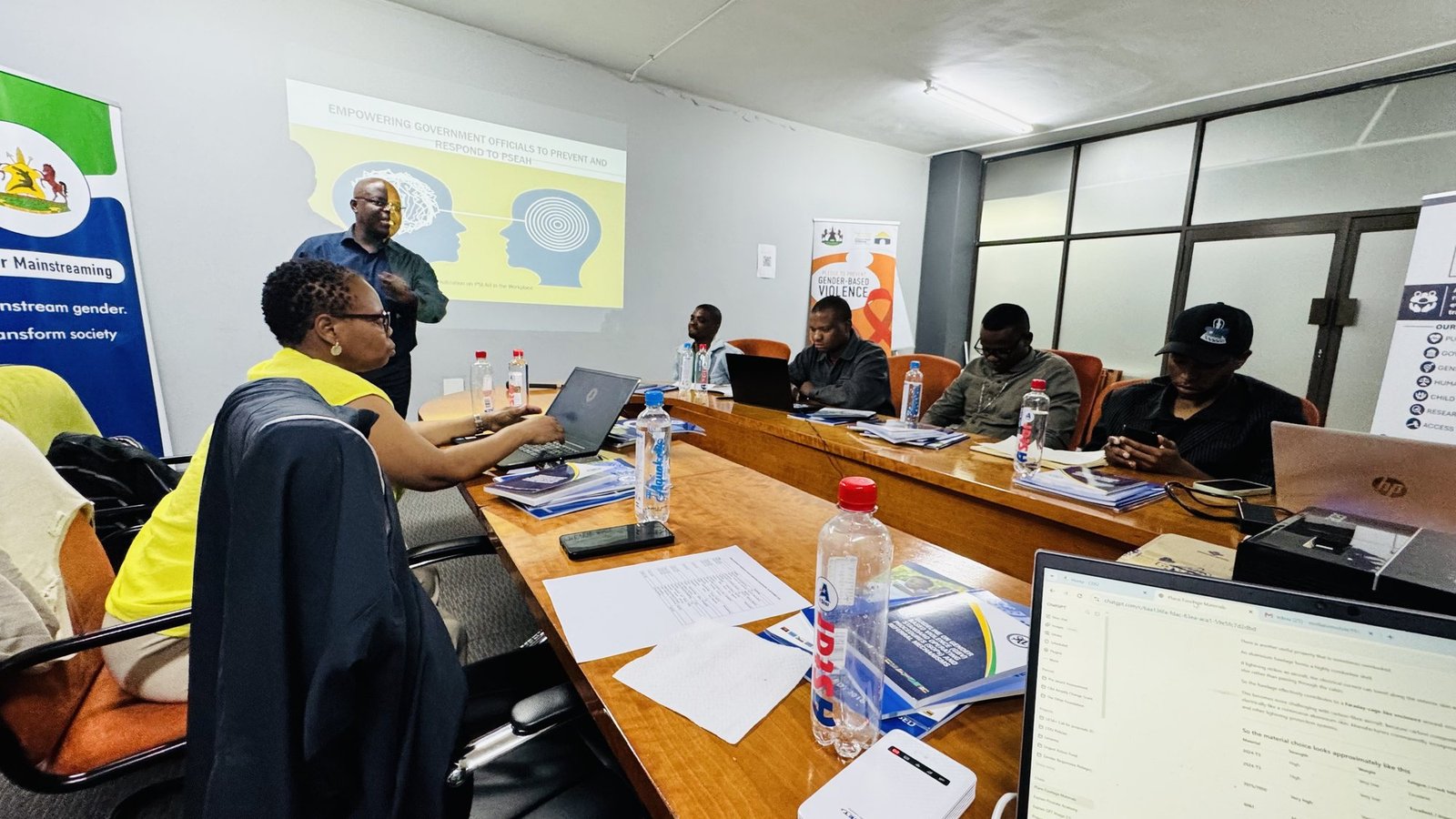
    A Ministry of Gender facilitator presenting to journalists during the gender and GBV workshop
    The programme built a common foundation in gender, GBV prevention and professional responsibility.
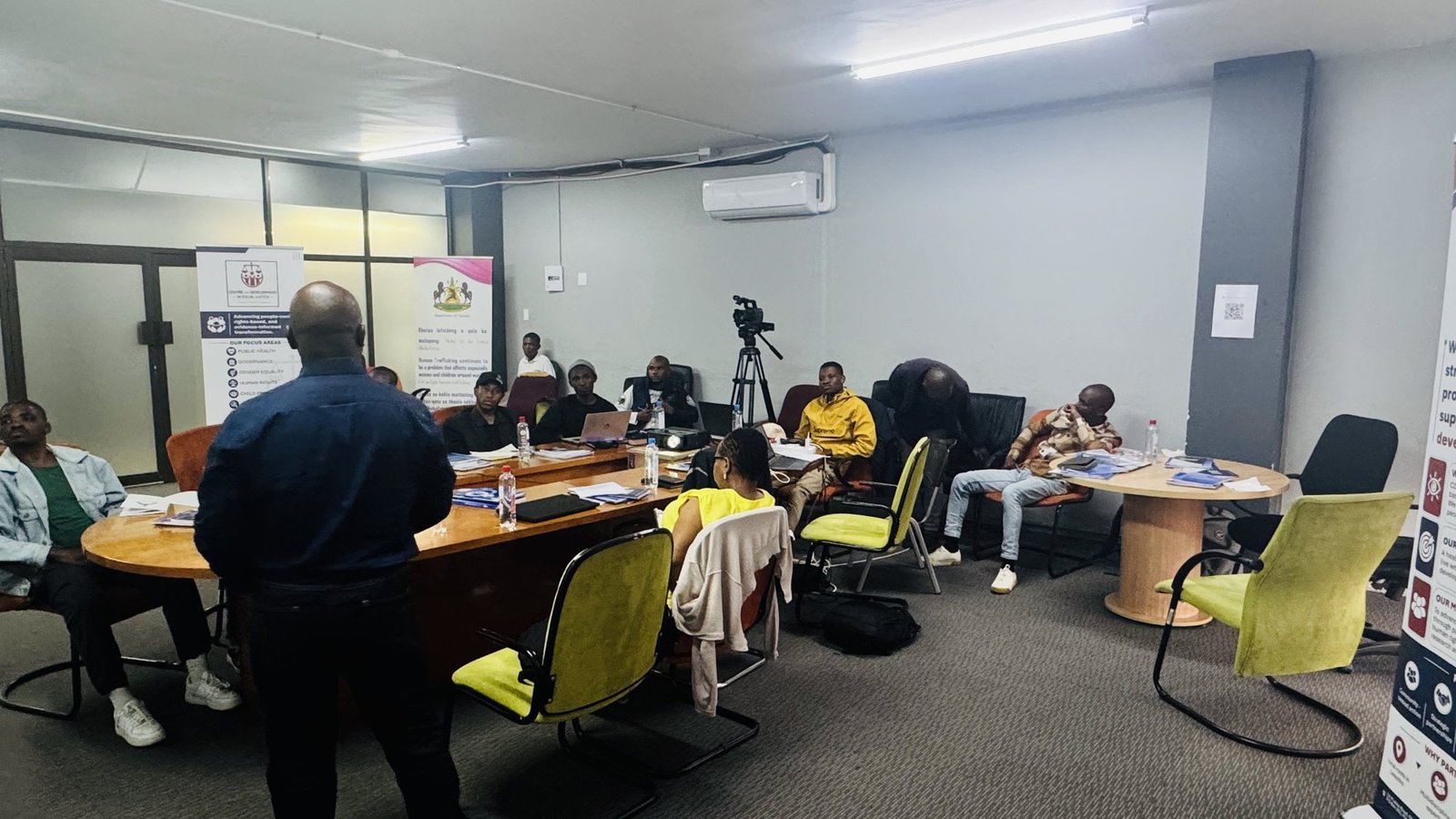
    Male journalists participating in the Ministry of Gender, MISA Lesotho and CDSJ training
    Participants examined how everyday editorial decisions can shape public attitudes and institutional accountability.

    Following public money through a gender and inclusion lens

    CDSJ’s Gender-Responsive Budgeting session began with a simple proposition: a public budget is not only an accounting document. It records choices about which problems receive attention, whose needs become priorities, how much Government commits and which institution must answer for the result.

    Participants worked through the distinctions between an allocation, a release, actual expenditure, an output and an outcome. These distinctions matter to journalism. Money approved in a budget may arrive late or only partly. Money spent does not by itself prove that a service reached the intended people. A facility counted as an output may still be inaccessible, unsafe, unreliable or too costly for some groups to use.

    “An amount is the beginning of the story. The public-interest story explains the choice, the delivery and the result.”Core message from CDSJ’s Gender-Responsive Budgeting session

    The session clarified that Gender-Responsive Budgeting does not mean creating a separate budget for women or dividing every allocation equally. It means examining how revenue and expenditure affect people differently, identifying unequal barriers and starting conditions, funding the activities needed to address those barriers, and changing plans when evidence shows that results remain unfair.

    From national announcement to community experience

    Journalists were encouraged to follow a public promise through the full budget cycle. This means asking who helped define the need, what Parliament approved, what Government released, where procurement and implementation took place, whether the service functions, and who can practically use and benefit from it.

    Six GESI domains for stronger reporting

    CDSJ introduced six Gender Equality and Social Inclusion domains that help journalists identify where exclusion can enter a policy, programme or budget. Each domain links community experience to a decision, institution, standard or budget line that can be investigated.

    Laws and institutional practiceWhether rules, eligibility criteria, standards and complaints systems include people fairly and assign clear responsibility.
    Access to and control over resourcesWhether distance, fees, disability access, information, opening hours or decision-making power prevent practical use.
    Beliefs and social normsWhether public decisions challenge or reinforce assumptions about gender roles, leadership, work and entitlement.
    Power and decision-makingWho defined the problem, selected beneficiaries, chose the location and had enough information to influence the result.
    Roles, responsibilities and timeHow paid work, unpaid care, farming, schooling and transport affect participation and access to services.
    Dignity, safety and wellbeingWhether privacy, safeguarding, accessibility and freedom from violence or stigma are treated as real programme costs.

    Intersectionality formed part of this analysis. Women, men and young people do not experience public services as uniform groups. Gender combines with age, disability, income, location, family status and other circumstances. A gender-responsive story therefore compares different lived experiences and traces each barrier to the responsible decision-maker and public provision.
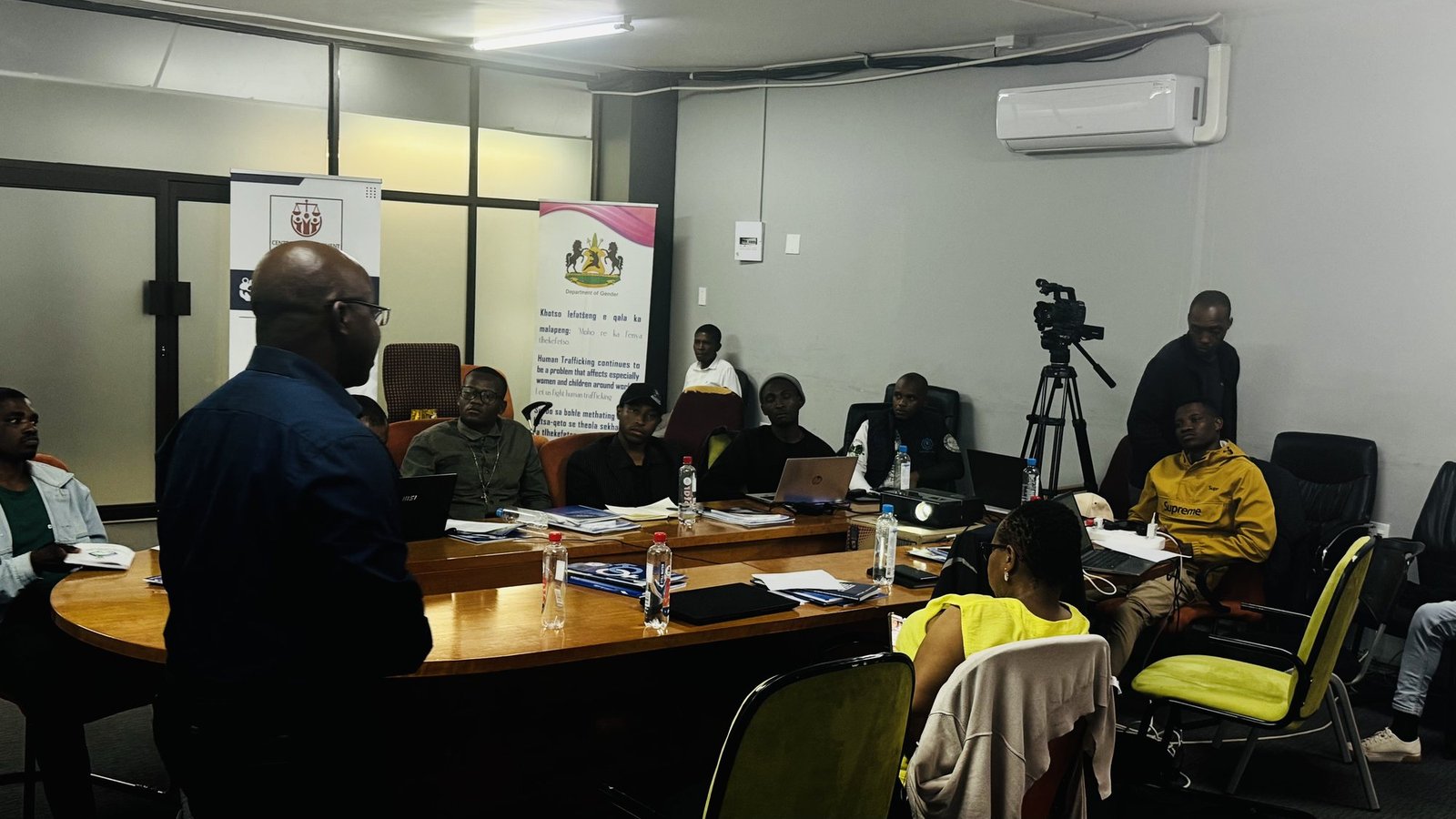
    CDSJ engaging journalists on public budgets, gender equality and social inclusion
    The practical discussion showed how a reporter can connect a community experience to public records, responsible institutions and measurable results.

    What gender-responsive reporting requires

    The training connected budget analysis with newsroom practice. Responsible reporting requires journalists to protect the dignity and privacy of survivors, avoid sensational language and images, seek informed consent, use gender-disaggregated evidence where it exists, and state clearly when important information remains unavailable.

    For budget stories, this also means going beyond the national announcement. A complete investigation compares the stated need with the approved amount, tracks releases and spending, examines geographic distribution and procurement, tests whether a service is safe and functional, and asks which groups gained most or least from the final result.

    Ten checks before publishing a GRB story

    1. Cite the correct year, document and amount.
    2. Separate what was approved, released, spent and delivered.
    3. Name the public problem and the responsible institution.
    4. Identify the intended groups and intersecting barriers.
    5. Apply the six GESI domains.
    6. Request disaggregated and geographic data.
    7. Compare selection criteria with actual beneficiaries.
    8. Include diverse affected voices safely and with consent.
    9. Measure functionality, quality, maintenance and outcomes.
    10. State evidence gaps and avoid assumptions or stereotypes.

    Building continued collaboration between the gender sector and the media

    The value of the workshop lies in continued application. Participants can take the concepts into routine reporting on violence, health, education, local government, water, agriculture, justice, public finance and other sectors. Gender-responsive journalism should not appear only during commemorative campaigns. It belongs in daily decisions about whose voice is heard, which evidence is tested and whether public commitments produce fair results.

    Continued collaboration between the Ministry, MISA Lesotho, CDSJ and media professionals can support future learning, responsible referral practices, better access to subject expertise and stronger public-interest reporting. Follow-up also creates an opportunity to see how participants apply the training in stories and how editorial practice changes over time.

    CDSJ’s perspective: accountable journalism strengthens gender justice

    CDSJ appreciates the Ministry of Gender’s leadership in convening the workshop and MISA Lesotho’s partnership in connecting gender knowledge with newsroom practice. Media professionals shape how people understand violence, public institutions and the choices Government makes with public resources.

    For CDSJ, gender-responsive reporting combines accuracy with dignity and accountability. It protects people from further harm, questions stereotypes instead of repeating them, and follows public promises until citizens can see who benefited, who remained excluded and what must change.

    This work strengthens both gender justice and democratic accountability in Lesotho. When journalists follow the money, find the people affected and test the result, they help communities and institutions move from announcements to evidence and from stated commitments to fair outcomes.

    Follow CDSJ’s work on gender equality, accountable governance and public-interest communication.
    More News & EventsSubscribe for Updates
  • CDSJ Condemns the Abduction and Torture of Kananelo Boloetse and Calls for a United National Response to Protect Democratic Space

    CDSJ Condemns the Abduction and Torture of Kananelo Boloetse and Calls for a United National Response to Protect Democratic Space

    For immediate release · 8 September 2026 · Maseru, Lesotho

    A national call to protect democratic space

    CDSJ calls for an impartial investigation, accountability and a united response that protects journalists, activists, human-rights defenders and every citizen’s right to participate safely in Lesotho’s democracy.

    Press releaseHuman rightsGovernanceLesotho

    The Centre for Development in Social Justice (CDSJ) strongly condemns the reported abduction, assault and torture of journalist, activist and human-rights defender Mr Kananelo Boloetse on Saturday, 5 September 2026.

    According to information presently in the public domain, Mr Boloetse was reportedly taken from his residence in Maseru by unidentified armed men, subjected to serious physical assault and later abandoned in the Thaba-Bosiu area before receiving medical treatment and reporting the matter to the Lesotho Mounted Police Service.

    CDSJ’s immediate calls

    • A prompt, thorough, credible and impartial investigation.
    • Appropriate measures to ensure Mr Boloetse’s continued safety where necessary.
    • Accountability for every person ultimately found to have planned, facilitated, financed or carried out the attack.
    • Regular, responsible public communication that does not compromise the investigation.
    • Sustained national mechanisms to protect journalists, activists and human-rights defenders before threats escalate into violence.

    Solidarity and a wider democratic concern

    CDSJ extends its solidarity to Mr Boloetse, his family, colleagues in the media, fellow human-rights defenders and the broader community of people and organisations working to advance democracy, accountability and social justice in Lesotho.

    An attack of this nature cannot be viewed simply as a private act of violence against one individual. Where a journalist, activist or public-interest advocate is abducted and tortured, the consequences extend beyond the immediate victim. Such incidents can create fear among journalists, civil-society organisations, researchers, lawyers, activists, whistleblowers and ordinary citizens who rely on democratic freedoms to participate meaningfully in the life of the country.

    Mr Boloetse has been publicly engaged in journalism, advocacy, constitutional litigation and wider debates on governance and accountability. Regardless of whether one agrees or disagrees with his views, protecting his right to express himself, investigate matters of public interest, organise, litigate and participate in national debate ultimately protects the democratic rights enjoyed by every Mosotho.

    A democratic society cannot function effectively where citizens begin to believe that public criticism, journalism, activism or advocacy may expose them to violence, intimidation or retaliation.Centre for Development in Social Justice

    Civic and media space is democratic infrastructure

    CDSJ is deeply concerned about the broader condition of Lesotho’s civic and media space and believes this incident should prompt national reflection on how democratic actors are protected.

    Lesotho has long benefited from an active civil society, an engaged media, an independent legal profession, community organisations, human-rights defenders and citizens willing to question decisions affecting their lives. These actors do not exist outside the democratic system, nor should they be understood as opponents of the State. They form part of the democratic infrastructure of the Kingdom of Lesotho and contribute to transparency, accountability, public participation, development and stronger public institutions.

    The present moment should not deepen divisions between Government, civil society, the media and other democratic actors. It should become an opportunity to strengthen the partnership necessary to protect Lesotho’s democracy. The defence of constitutional democracy requires cooperation among State institutions, Parliament, the judiciary, law-enforcement agencies, political leaders, civil-society organisations, media institutions, professional bodies, communities and citizens.

    Government’s responsibility and an investigation led by evidence

    Government carries an important constitutional responsibility to ensure that every person in Lesotho can exercise fundamental freedoms in safety. This becomes especially important where journalists, activists and human-rights defenders face threats, intimidation or violence connected, or perceived to be connected, with their democratic work.

    The strongest response would be a transparent, credible and professional investigation that establishes what happened, identifies those responsible and demonstrates that violence against people exercising legitimate democratic freedoms will not be tolerated, regardless of who the perpetrators may ultimately prove to be.

    CDSJ deliberately refrains from drawing conclusions that properly belong to a competent investigation. At the same time, the seriousness of the circumstances requires all credible allegations, possible motives and relevant lines of inquiry to be examined thoroughly and independently. Democratic confidence is strengthened when institutions follow the evidence wherever it leads, without political favour, institutional protection or predetermined conclusions.

    We place our confidence in the ability of the Government of Lesotho, the Lesotho Mounted Police Service and other responsible institutions to exercise the diligence, independence and professionalism this matter requires. We encourage Government to treat this moment not only as a criminal investigation, but also as an opportunity to reaffirm its commitment to an open democratic society in which journalists, activists, human-rights defenders and civil-society organisations can carry out their work without fear.

    From response to lasting protection

    CDSJ respectfully calls for a prompt, thorough and impartial investigation into the abduction and torture of Mr Boloetse, appropriate measures to ensure his continued safety where necessary, and accountability for every person who may ultimately be found to have planned, facilitated, financed or carried out the attack.

    We further encourage regular and responsible communication with the public on the progress of the investigation, to the extent possible without compromising its integrity. Public confidence will depend not only on the outcome, but also on confidence in the process through which that outcome is reached.

    Beyond the immediate investigation, Lesotho should strengthen practical mechanisms for protecting journalists, activists and human-rights defenders. This should include sustained dialogue among Government, civil society, media organisations, security institutions and other relevant stakeholders on how threats can be reported, assessed and addressed before they escalate. Such engagement should form part of an ongoing national commitment to protect the democratic space within which citizens participate in public life.

    Protecting disagreement protects democracy

    Government and civil society will not always agree, nor should they be expected to. Journalists will sometimes publish uncomfortable information, activists will challenge public decisions, civil-society organisations will criticise policy, and citizens will approach the courts to contest the actions of public institutions. These are not signs of democratic failure. They are signs that democratic institutions are being used.

    Government has both the right and responsibility to govern, maintain public order, protect national interests and respond to criticism through lawful democratic processes. The strength of a democracy lies in the ability of these different actors to disagree while continuing to recognise one another as legitimate partners in the constitutional life of the country.

    The response to Mr Boloetse’s case must therefore rise above political camps and institutional defensiveness. The question before Lesotho should not be which side of a political argument he belongs to, but whether our democratic system is strong enough to ensure that no one is abducted, assaulted or tortured because of journalism, advocacy, political opinion, public criticism or lawful civic participation.

    Protecting that principle protects Government as much as it protects civil society, because stable democratic institutions ultimately strengthen the legitimacy of the State itself.

    CDSJ encourages the Government of Lesotho to use this moment to renew its partnership with the media, civil-society organisations and human-rights defenders, and to reaffirm publicly that those who scrutinise Government, challenge decisions or demand accountability remain entitled to the protection of the State.

    A confident democratic government does not require silence from its citizens. It protects their right to disagree while ensuring that disagreements remain within the rule of law.CDSJ statement · 8 September 2026

    Our solidarity

    To Ntate Kananelo Boloetse, CDSJ expresses its solidarity and wishes him strength and recovery. His experience should concern every person who values Lesotho’s democratic future.

    No journalist should have to choose between personal safety and reporting the truth as they understand it. No activist should have to choose between safety and advocacy. No civil-society organisation should have to calculate whether speaking about injustice may expose its members to violence, and no citizen should be deprived of security because of legitimate participation in public affairs.

    The most powerful response Lesotho can give to those who use violence to create fear, whoever they may ultimately be, is to demonstrate that our institutions remain stronger than intimidation and that our democracy remains capable of protecting disagreement.

    CDSJ remains committed to working with the Government of Lesotho, law-enforcement institutions, the media, civil-society organisations, communities, development partners and all democratic stakeholders to protect and strengthen the civic space upon which Lesotho’s constitutional democracy depends.

    Read the official press release

    Download the signed, print-ready PDF issued by CDSJ on 8 September 2026.

    Download the full statement (PDF)

  • CDSJ Launches Digital Presence to Advance Development Justice Across Africa

    CDSJ Launches Digital Presence to Advance Development Justice Across Africa

    The launch of developmentjustice.org established a public home for CDSJ’s programmes, people, research, activities and partnership opportunities—and an important channel for organisational transparency and engagement.

    Launch date15 May 2026
    Platformdevelopmentjustice.org
    PurposeInformation, accountability and engagement

    The Centre for Development in Social Justice (CDSJ) officially launched its digital presence at developmentjustice.org, marking an important milestone in the organisation’s institutional development. The website provides a central, publicly accessible platform through which communities, civil-society organisations, government institutions, development partners, researchers and other stakeholders can learn about CDSJ’s work and connect with the organisation.

    For a growing public-interest organisation, a website is more than an online brochure. It is part of the organisation’s public infrastructure: a place to explain its mandate, document activities, share evidence, publish institutional information and make opportunities easier to find.

    A public home for CDSJ’s work

    CDSJ works across connected social-justice concerns. The website brings those areas together so that visitors can understand how programmes on governance, gender equality, human rights, public health, child protection, environmental justice and access to justice contribute to a broader people-centred development agenda.

    Why a connected platform matters

    Social-justice challenges rarely fit within a single programme label. A story about gender-based violence may also concern access to justice, child protection, public health and governance. The website allows CDSJ to show these connections while keeping programme areas clear and navigable.

    The platform also creates continuity. Project meetings, field activities, public consultations, media appearances and research outputs can be documented over time rather than disappearing after an event. This helps CDSJ tell the fuller story of how ideas develop, partnerships are formed, evidence is gathered and programmes grow.

    What visitors can find

    Programmes and projects

    Information about CDSJ’s thematic priorities, current initiatives, implementation approaches and the issues the organisation is working to address.

    News, events and activity stories

    Substantive updates from workshops, consultations, field activities, radio programmes, institutional engagements and other significant moments in CDSJ’s work.

    Publications and resources

    Research reports, policy briefs, practical tools, institutional documents and other materials intended to support learning and public engagement.

    People and institutional information

    Profiles of CDSJ’s leadership, board, staff, advisers and volunteers, alongside information about the organisation’s identity, values and governance.

    Opportunities

    A public channel for vacancies, internships, consultancies, calls for applications, volunteer roles and partnership opportunities as these become available.

    Ways to connect

    Contact pathways, newsletter subscription, social-media links, partnership information and calls to support CDSJ’s work.

    Supporting transparency and organisational memory

    Public-interest organisations build trust by showing what they do, why they do it and what they are learning. A well-maintained website supports this by creating an accessible record of activities, programme development and institutional growth.

    Regular publication also strengthens organisational memory. Staff, partners and future collaborators can return to earlier stories and resources to understand how an initiative began, which stakeholders were involved, what questions were raised and how later work connects to previous activities. This is especially important where projects involve long-term policy reform, community engagement or coordination across several institutions.

    The platform will continue to develop as CDSJ grows. New activities, publications, opportunities and profiles can be added through an organised content system, allowing the website to remain current without rebuilding pages for every routine update.

    Designed for public engagement

    The website was created to make CDSJ’s work easier to discover and understand. Programme information provides context, while individual stories offer deeper accounts of activities and their significance. Publications make evidence available for wider use, and contact and partnership pathways help visitors move from reading about the organisation to engaging with it.

    This approach reflects CDSJ’s belief that development work should be open to participation and public scrutiny. Clear information can support collaboration, reduce duplication, connect people with resources and create opportunities for institutions and communities to work together around shared justice priorities.

    Organisational reach1central public platform
    Current programme areas7connected justice themes
    Public access24/7information and contact pathways

    An invitation to connect and collaborate

    CDSJ invites civil-society organisations, government institutions, development partners, community actors, researchers, media organisations and individuals committed to social justice to explore the platform and identify areas of shared interest.

    Visitors can follow current activities through News & Events, learn about the organisation’s programmes and people, access publications as they are released, subscribe for updates or contact CDSJ about partnerships and collaboration. As the organisation’s work expands, the website will remain a key channel for documenting progress and keeping the public informed.

    CDSJ’s perspective: a website should serve the organisation’s mission

    CDSJ’s digital presence is intended to make information, evidence and opportunities more accessible. Its value will be measured not only by how it looks, but by whether communities and partners can find what they need, understand the organisation’s work and engage through clear pathways.

    The launch was therefore the beginning of an ongoing commitment: to keep the platform current, professional and useful; to document CDSJ’s work with substance; and to use digital communication as part of accountable, people-centred development.

    Explore CDSJ and stay connected.
    Explore Our Programmes
    Subscribe for Updates