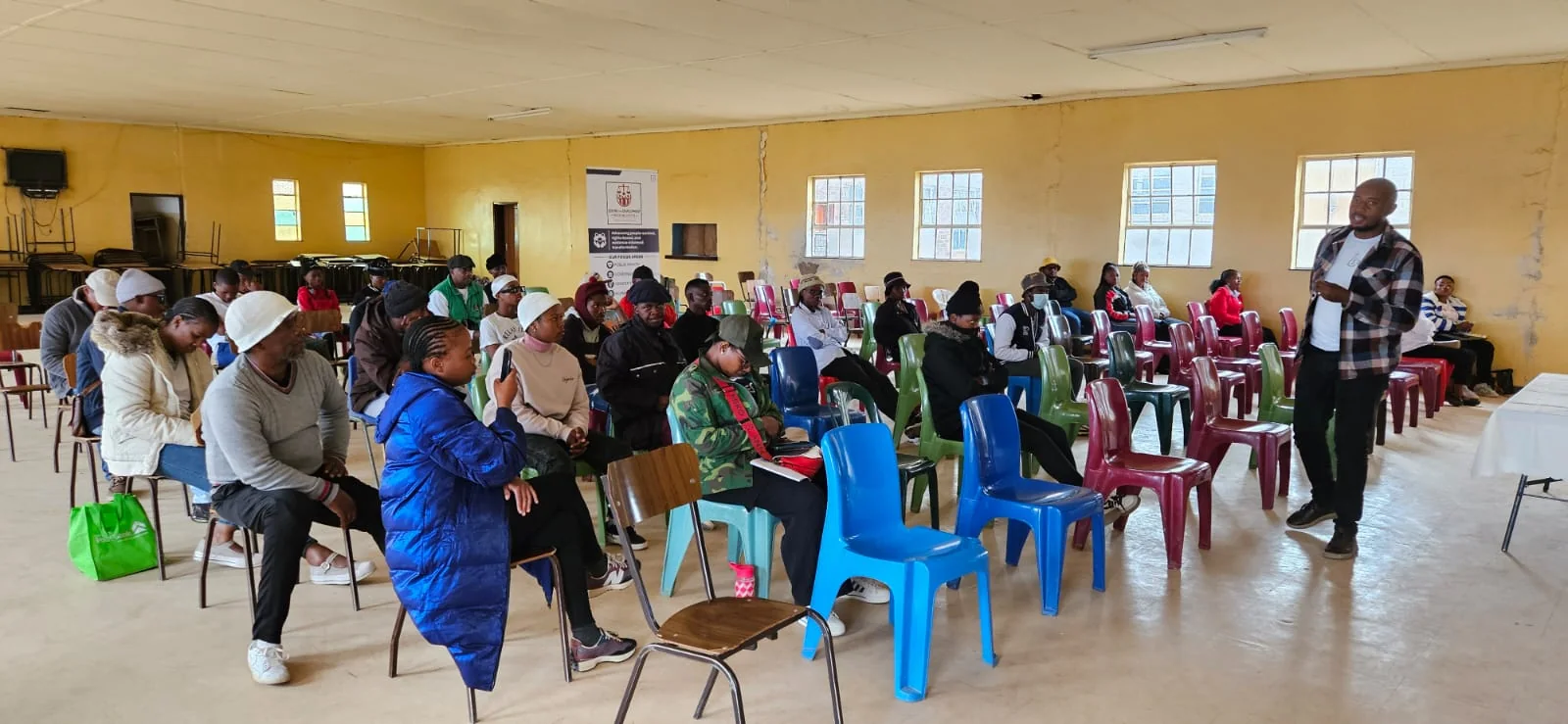
CDSJ supported a Ministry of Gender youth engagement initiative at Dahon High School in Mapoteng, delivering an interactive session on gender-based violence prevention, the role of men and boys, gender equality and meaningful youth participation.
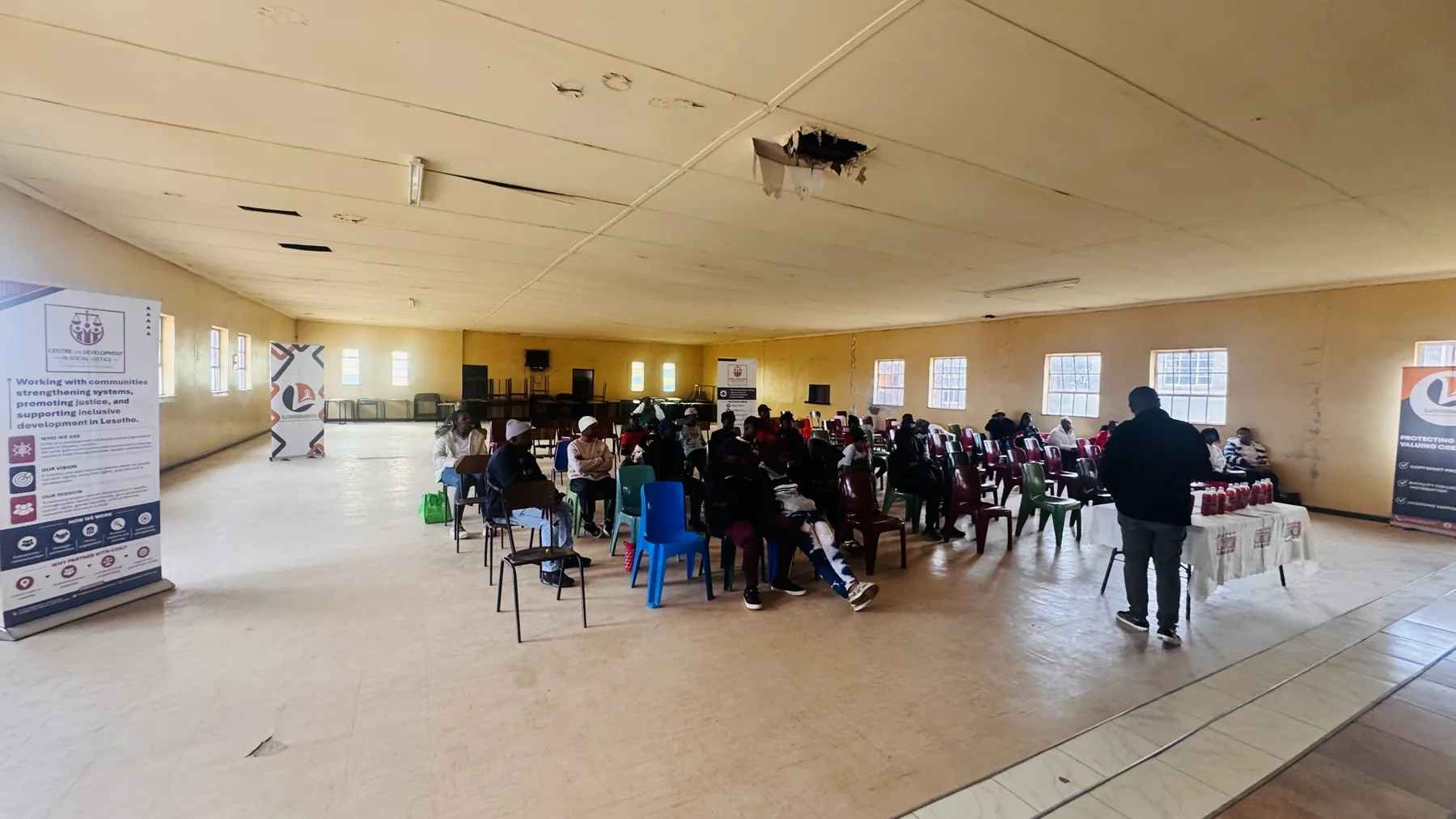
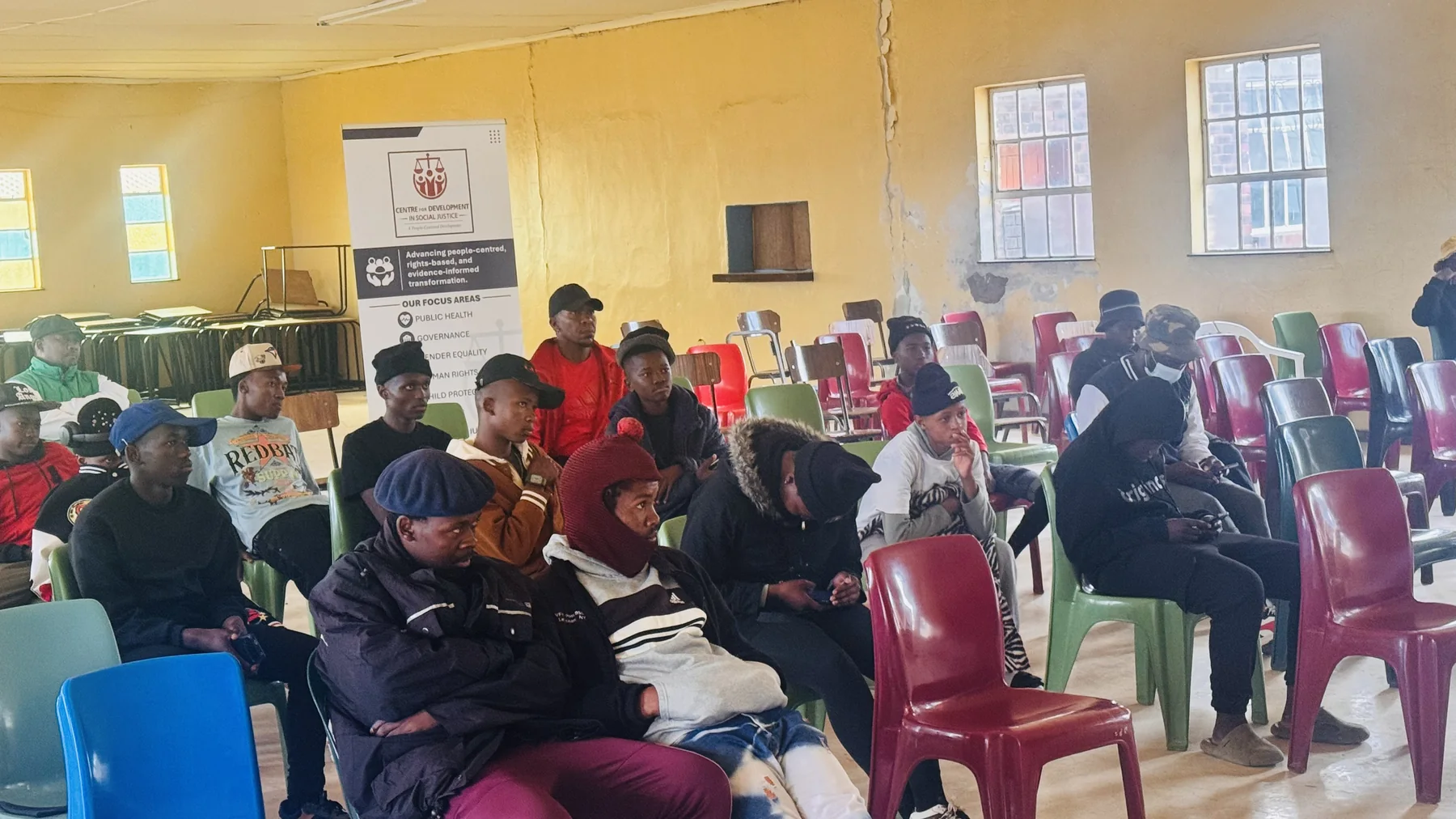
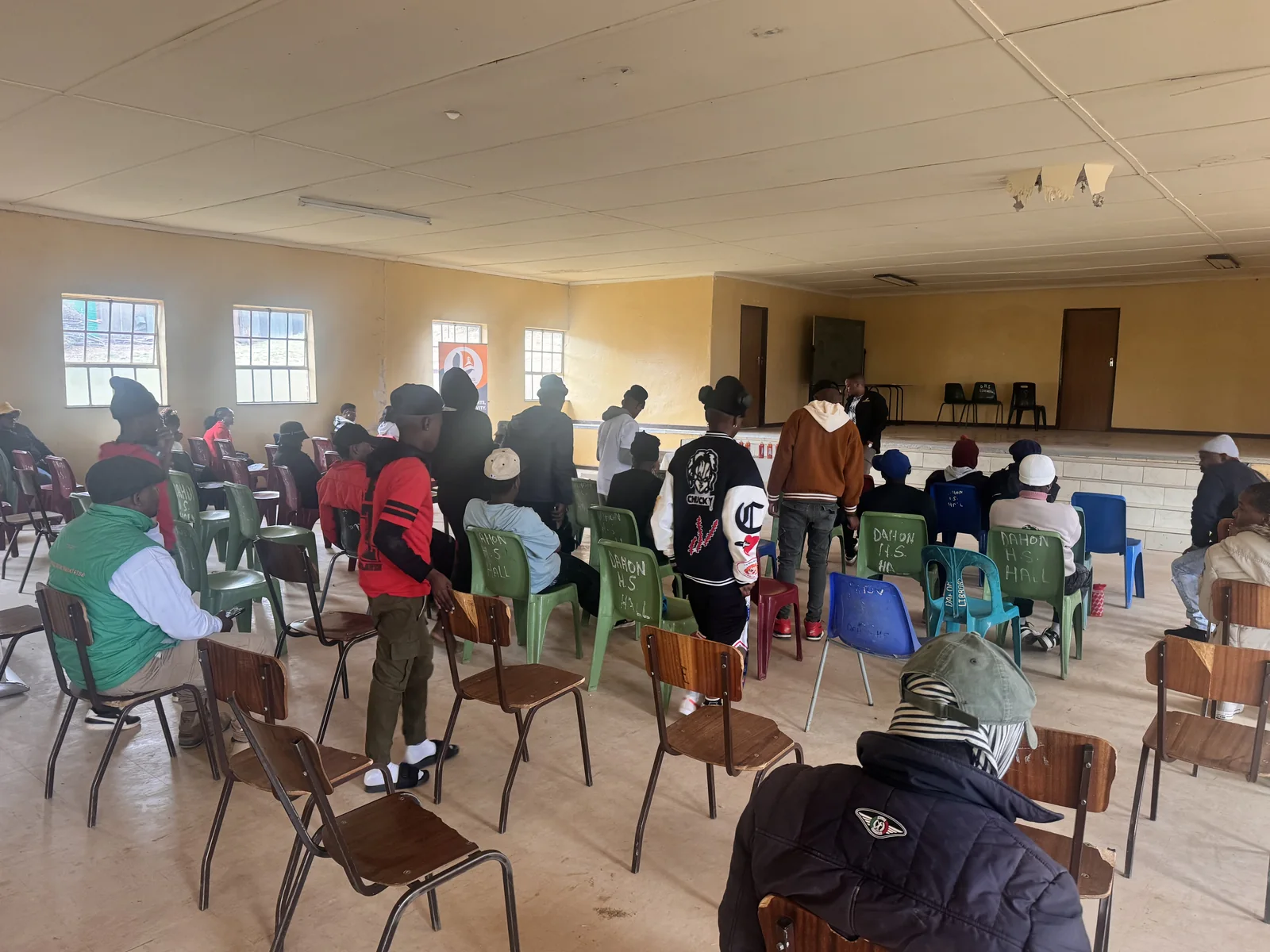
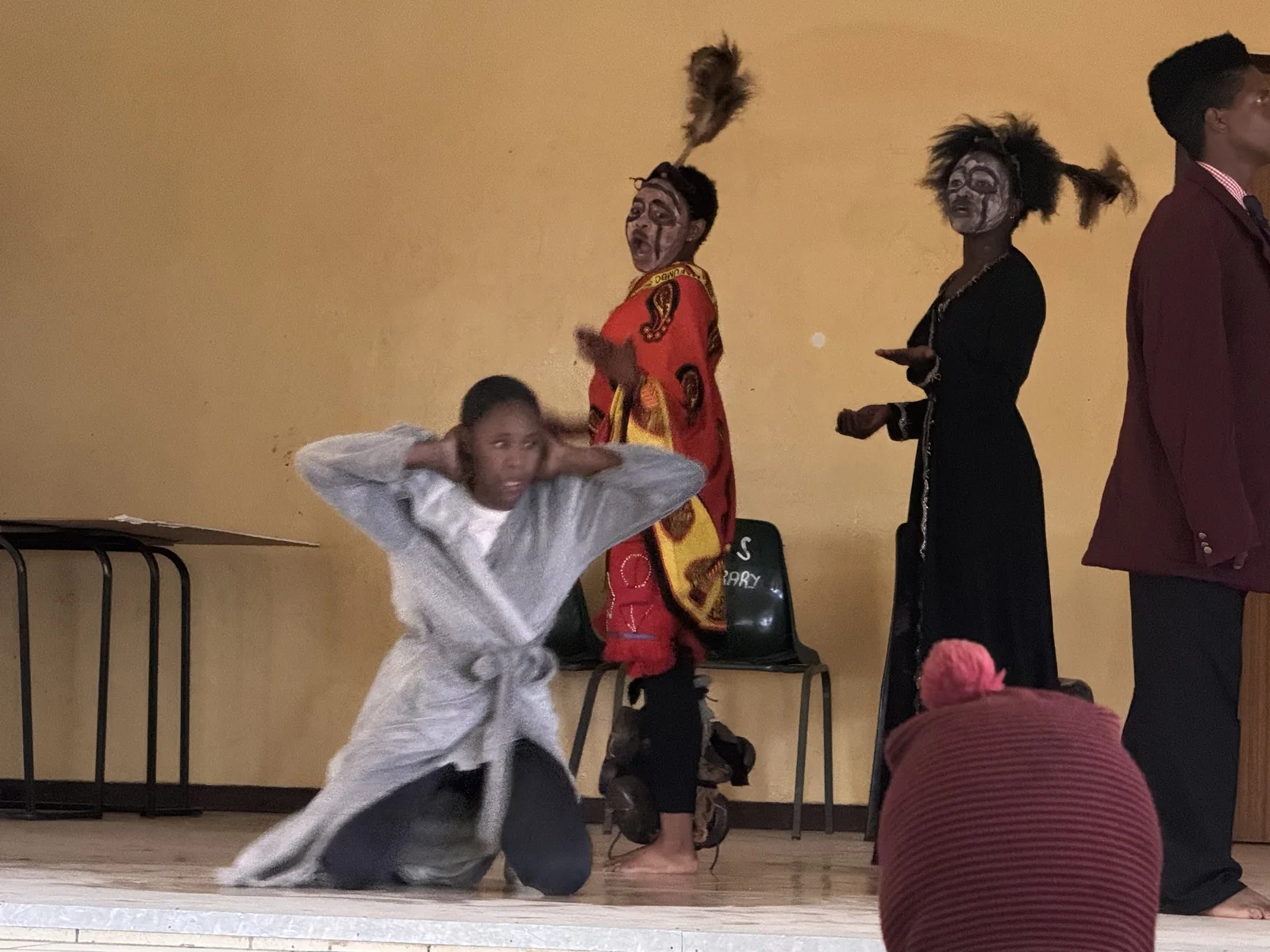
On 5 September 2026, the Centre for Development in Social Justice (CDSJ) joined the Ministry of Gender in a youth engagement initiative held at Dahon High School in Mapoteng. The gathering created a space for young people to examine how gender norms, unequal power and silence around violence affect their lives, their relationships and the communities in which they are growing up.
CDSJ’s contribution, delivered by Adv. Motlatsi J. Mofolo, connected two issues that are often discussed separately. The first was how men and boys can become accountable partners in preventing gender-based violence (GBV). The second was how young people can participate meaningfully in gender-equality decisions rather than being invited only after programmes and priorities have already been decided.
Why prevention must begin before harm occurs
The presentation placed the discussion within Lesotho’s wider gender and demographic context. It emphasised that GBV cannot be treated only as an individual act or as a private matter that institutions address after violence has already occurred. Violence is also shaped by everyday expectations within families, peer groups, schools, community structures, workplaces and digital spaces.
These figures, presented from UNFPA and UNICEF materials referenced in the session, reinforce the need for prevention that changes the conditions in which violence becomes normalised or concealed. In a country where more than 60 per cent of the population is under 35, youth participation must form part of the prevention system rather than remain a small supporting activity.
“Ho thibela tlhekefetso ke mosebetsi oa sechaba sohle, empa o qala ka boikarabello ba motho ka mong.”
Preventing violence is a responsibility shared by the whole community, and it begins with individual accountability.
Men and boys as accountable prevention partners
The session challenged the idea that work with men and boys simply means adding male participants to a meeting. Meaningful engagement must produce changes in attitudes, behaviour, power relations and accountability. Men and boys should participate as people with their own duty to reject violence, coercion, entitlement and harmful peer pressure.
Accountability without displacing women’s leadership
Engaging men and boys should never excuse perpetrators, dilute women’s leadership or make men the centre of GBV work. It should create honest spaces in which boys and men can question harmful ideas about masculinity, practise respectful relationships and challenge one another when silence protects abuse.
Participants considered some of the conditions that men and boys can help change: social expectations that equate masculinity with control or aggression; the protection of offenders in the name of family or community reputation; economic and relationship power used to limit another person’s choices; online harassment and image-based abuse; sexist jokes and coercive behaviour that are dismissed until harm escalates; and peer pressure that rewards dominance.
The presentation proposed a practical pathway that can be adapted to schools and other community spaces:
From youth attendance to youth influence
The second part of CDSJ’s intervention asked a direct question: how much influence do young people actually have over decisions that affect their safety, dignity and future? A room may contain many young people while still leaving all important decisions in adult hands.
The presentation described a participation ladder that begins with decoration, where youth are invited for numbers, entertainment or photographs but have no influence. Consultation allows young people to express views, although adults may still make decisions without reporting back. Collaboration gives youth a role in shaping activities, messages and monitoring. Co-leadership shares authority and implementation responsibility. Youth-led change enables young people to identify concerns, organise action, engage duty-bearers and remain accountable to their own constituencies.
What meaningful participation requires
Young people need safe and continuous ways to contribute. Programmes should involve them when problems are defined, when solutions are designed and when results are reviewed. Participation also requires practical support such as safe venues, accessible information, transport or data where needed, clear safeguarding arrangements and feedback on what decision-makers accepted, rejected or funded.
The discussion also recognised barriers that can exclude young people even when an invitation exists. Adults may dismiss youth as inexperienced. Girls and young women may face stigma, care responsibilities or safety risks when they speak. Costs, disability access, timing and language can quietly keep some voices out. Young participants may also fear retaliation at home, at school or online if they speak openly about violence or discrimination.
Turning discussion into practical commitments
The session concluded with a simple framework for moving from discussion to action over a 90-day period. During the first 30 days, participants and institutions can identify the spaces where men, boys and youth should be engaged, the people who can open those spaces, and the safeguarding and referral arrangements that must be in place.
During days 31–60, structured dialogues can be held and young people can help shape prevention messages, school or community outreach, digital-safety content and reporting pathways. During days 61–90, participants can review whether the quality of youth participation improved, whether harmful norms were challenged, whether referral pathways were used appropriately and whether public commitments were honoured.
This framework does not assume that a single engagement can transform behaviour. A first dialogue can open the door, but prevention requires repeated practice, visible accountability and institutions that continue listening after an event has ended.
CDSJ’s perspective: youth voice belongs inside the prevention system
CDSJ appreciates the Ministry of Gender’s initiative and the opportunity to contribute to youth engagement in Mapoteng. Work to prevent GBV gains strength when it reaches young people before harmful expectations about gender, power and relationships become deeply established.
Engaging men and boys carries a clear purpose: to build accountability among those who can interrupt harmful peer norms, reject silence and support respectful relationships without displacing the leadership of women and girls. Meaningful youth participation carries an equally clear purpose: to ensure that young people help shape the decisions, services and community responses that affect their lives.
For CDSJ, the measure of a successful youth engagement is not attendance alone. The deeper test is whether young people leave with clearer knowledge, whether institutions create safe routes for their continued participation, and whether commitments lead to changes that can be seen in homes, schools, community spaces and public decision-making.
Leave a Reply