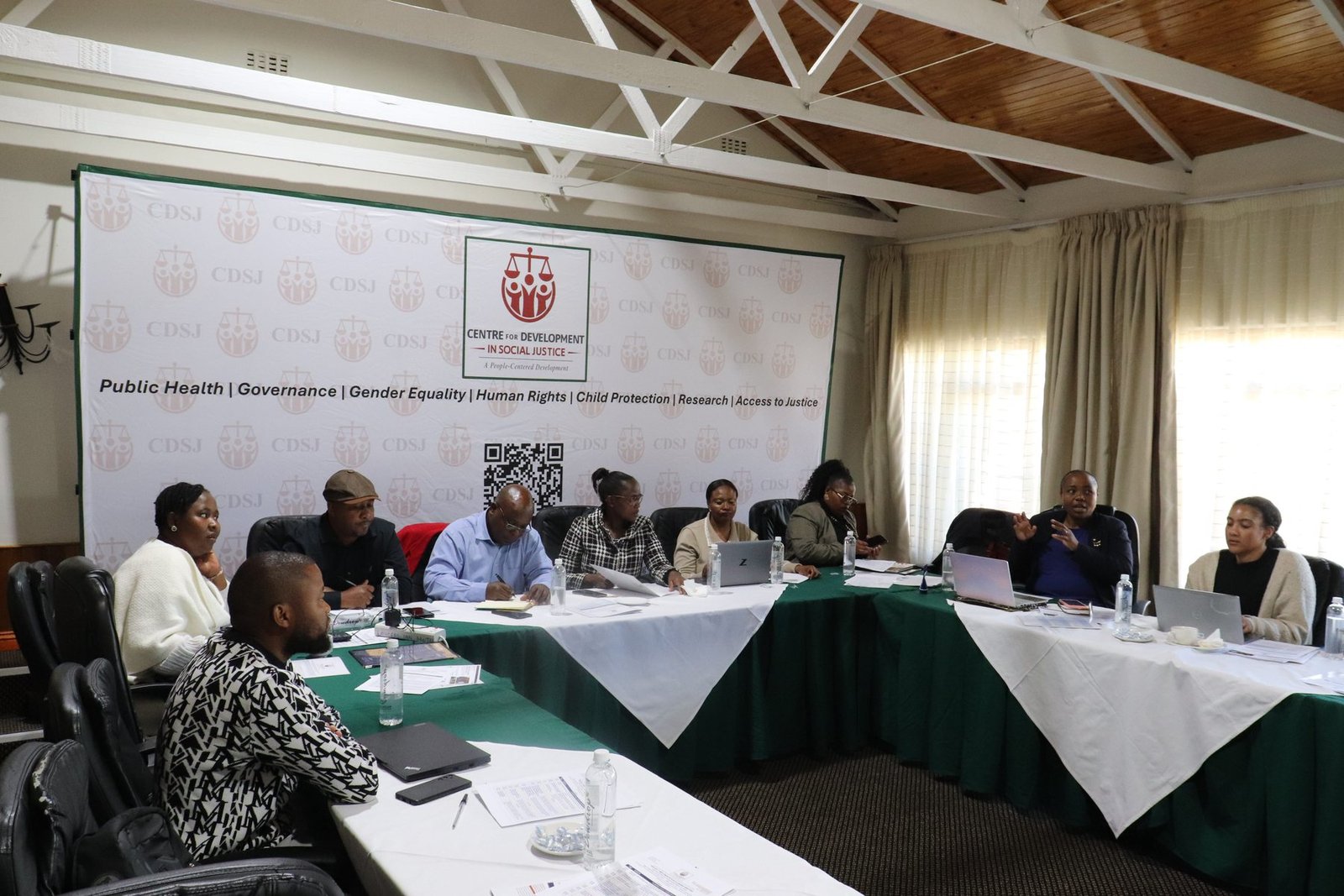
CDSJ convened government, policing, civil-society and United Nations stakeholders to turn three connected gender-justice priorities into a practical implementation pathway for Lesotho’s criminal justice system.
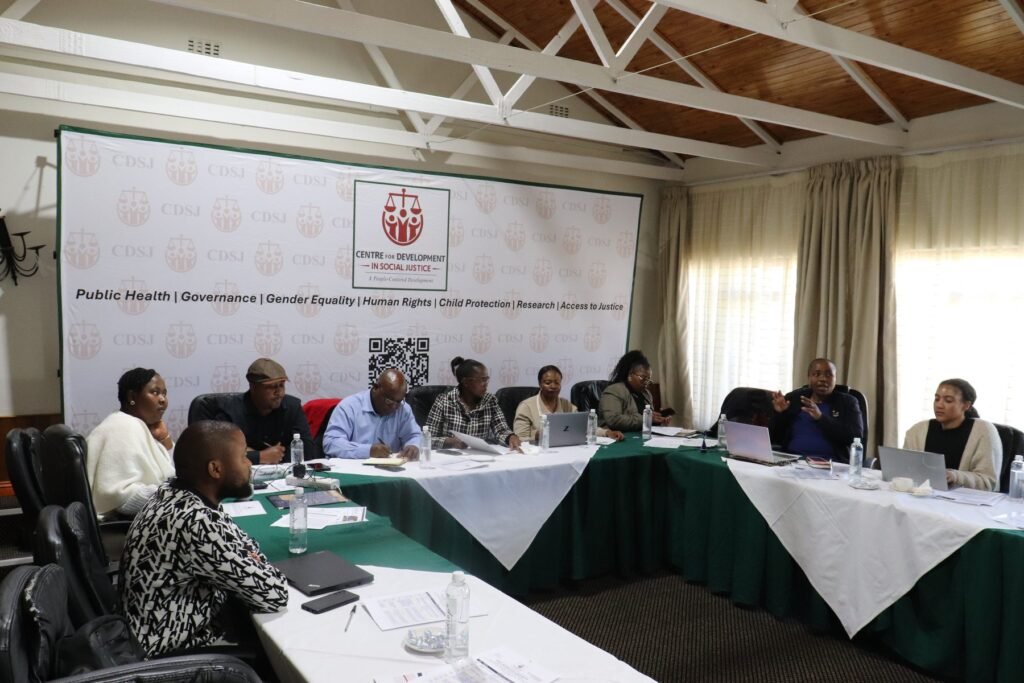
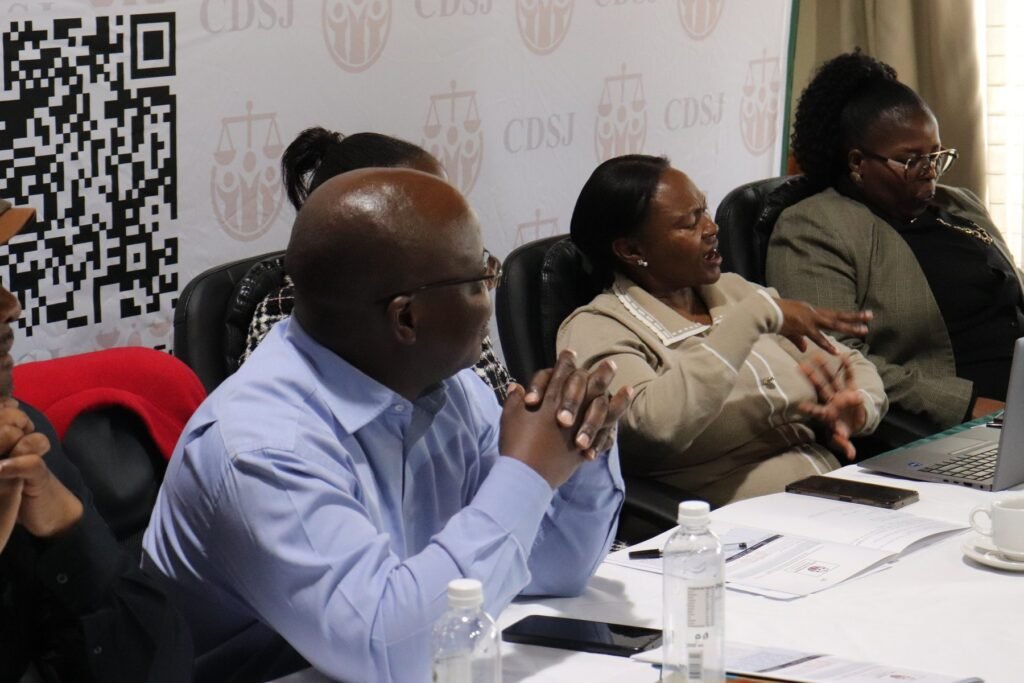
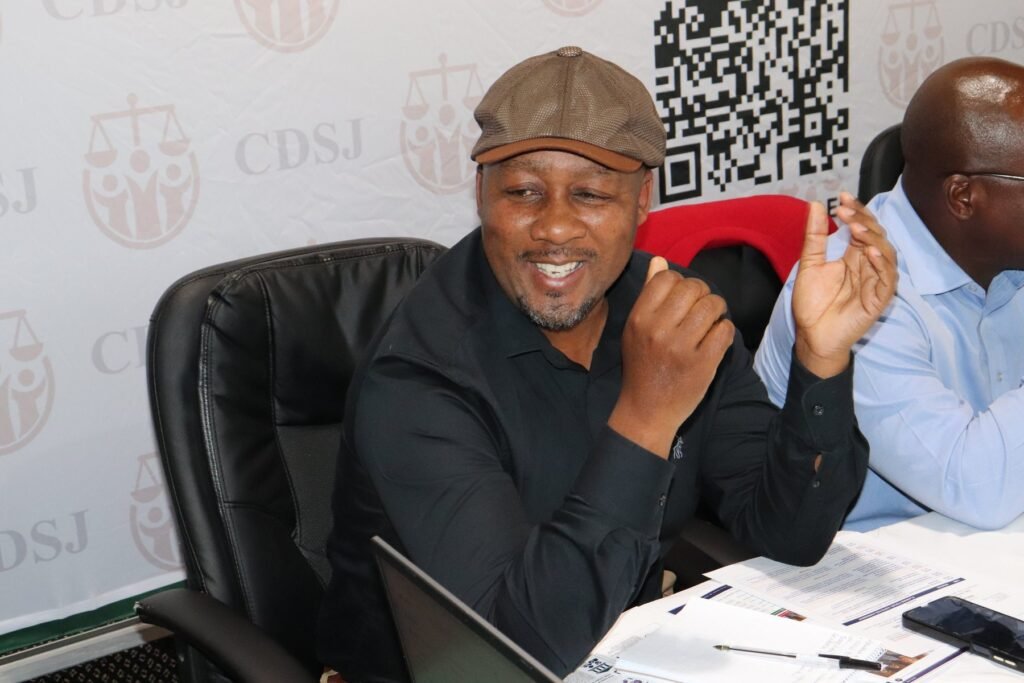
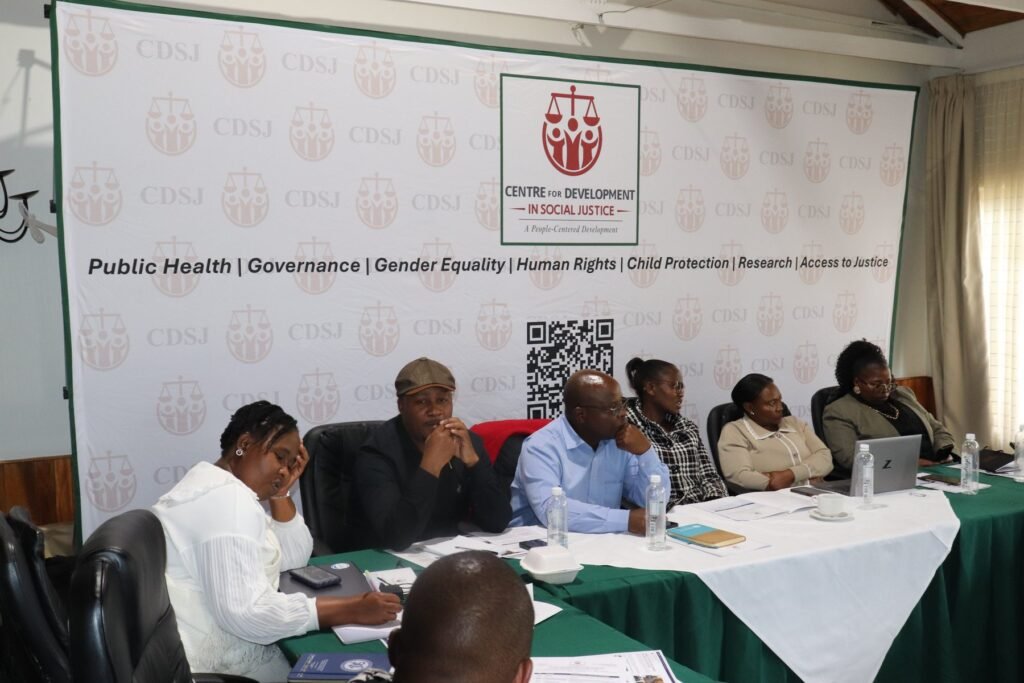
On 26 August 2026, the Centre for Development in Social Justice (CDSJ) convened a full-day project implementation planning meeting at Lancers Inn in Maseru. The meeting moved beyond a broad statement that criminal justice should be gender-responsive and examined the concrete legal, operational and institutional work required to make that principle meaningful for women and girls in Lesotho.
The process engaged stakeholders from government, policing, civil society and the United Nations system. Invited institutions included the Ministry of Gender, the Lesotho Mounted Police Service’s Child and Gender Protection Unit (LMPS/CGPU), Women and Law in Southern Africa–Lesotho, UNFPA and UN Women. Their different mandates were important because the issues under discussion cannot be resolved by one organisation or one part of the justice system acting alone.
Turning a reform idea into an implementation plan
The meeting opened by confirming the project purpose, its three planned deliverables and the key questions that needed collective attention. Participants were invited to consider relevance, feasibility, institutional linkages, risks and opportunities for collaboration before working through each reform area in detail.
The shared challenge
Women and girls can experience serious harm through phones, social media and other digital platforms while police and prosecutors lack sufficiently clear, practical guidance for recording, investigating and taking these cases forward. Girls and young women may also face criminal responsibility alone in pregnancy- and child-related cases even where men or other people share responsibility.
CDSJ’s project connects legal research, institutional practice, public engagement and case-based learning. The aim is not only to describe unfairness, but to help produce clear tools, credible evidence and coordinated advocacy that institutions can act upon.
Three connected reform workstreams
Clearer responses to technology-facilitated GBV
The first workstream focuses on abuse carried out through mobile phones, social media and other digital platforms. Planning covered the scope of the legal and operational issues, evidence needs, a drafting process for clearer regulations, practical police guidance, consultation and validation, technical roles, approvals and milestones. The intended pathway includes focused discussions, review of real cases, preparation of draft legal rules and step-by-step guidance, followed by formal engagement with justice leaders.
Fairer treatment of girls and young women
The second workstream examines one-sided criminal liability in pregnancy- and child-related matters, including abortion, infant abandonment and child neglect allegations. It asks whether the full circumstances are examined, whether shared responsibility is investigated and whether law and practice place a disproportionate burden on women and girls. The planned work combines consultation and case review with a clear reform paper and engagement with Parliament’s committee responsible for law and public safety.
Using a deserving case to inform wider change
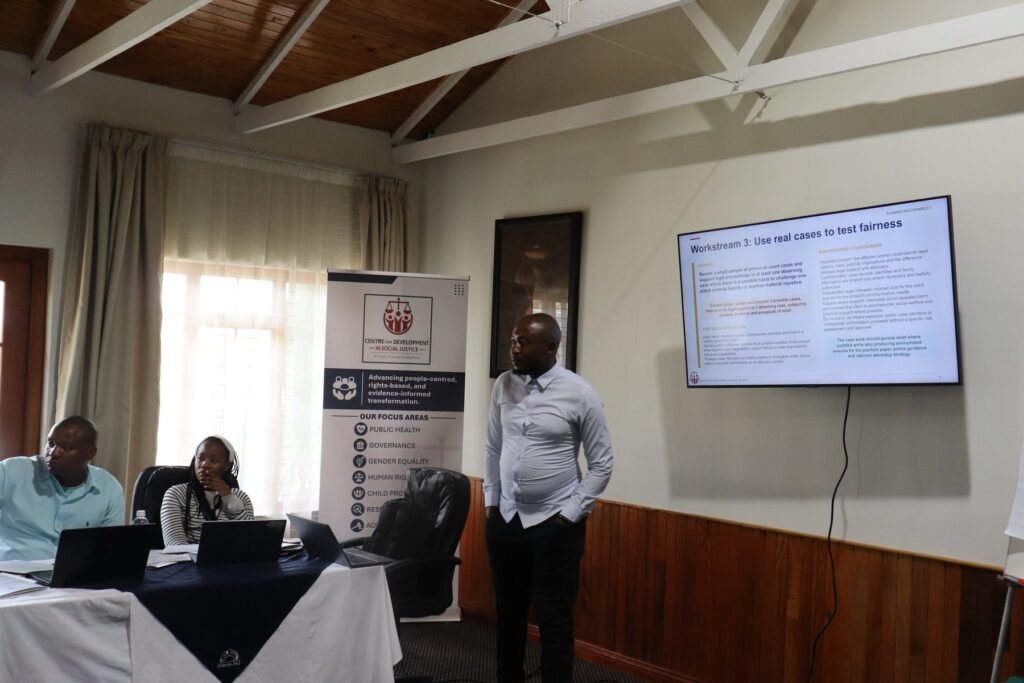
The third workstream will identify and carefully assess possible prison or court cases, select one deserving case for potential review or appeal, and use the lessons to support broader legal and policy reform. Planning addressed selection criteria, legal strategy, institutional roles, decision points and the safeguards required before any case-related step is taken.
What stakeholders planned together
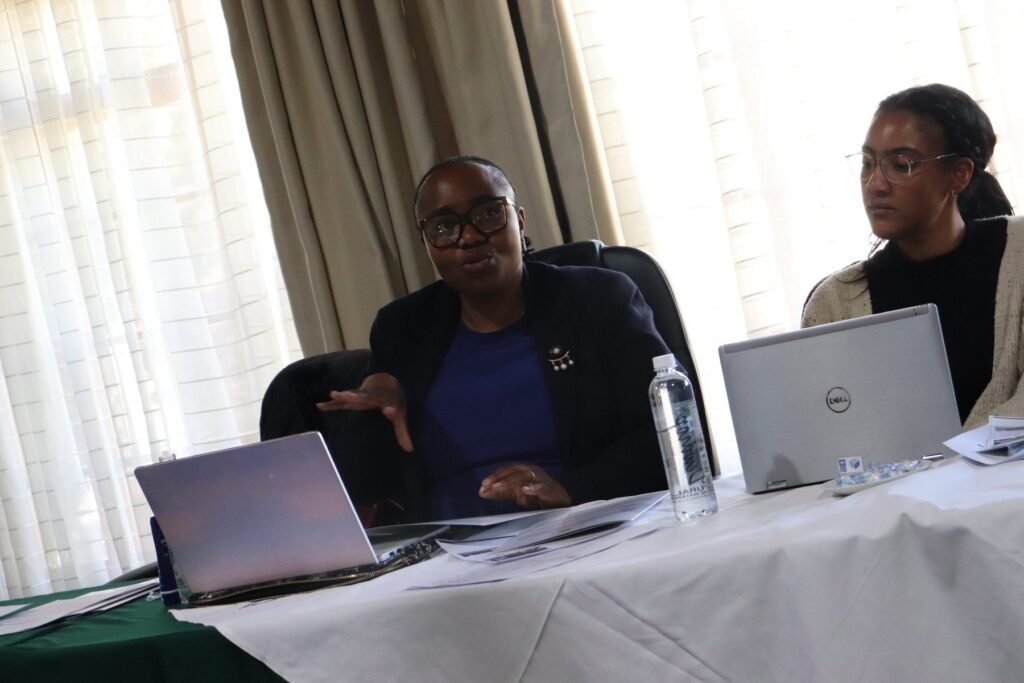
For the technology-facilitated GBV workstream, the agenda required agreement on legal and operational scope, the evidence base, drafting responsibilities, technical input, consultation and validation pathways, required approvals and key milestones. For the position paper on one-sided criminal liability, participants considered priority legal and policy questions, the gender-justice framing, consultation, parliamentary engagement, responsibilities and timing.
The case-review workstream required additional care. Participants considered referral and selection criteria, assessment of possible cases, legal strategy, informed consent, confidentiality, safeguarding, institutional roles and the points at which decisions must be made. Cross-cutting discussions then addressed sequencing, coordination, information sharing, communications, documentation, learning, risk management and progress review.
The day concluded by consolidating an implementation action plan: identifying immediate actions, the institutions or people responsible, key milestones and dependencies, and the purpose of the next coordination meeting. This emphasis on named responsibilities and follow-through is essential if collaboration is to move from agreement in the room to measurable institutional action.
Safeguarding must shape every step
Protecting people who share their stories
CDSJ emphasised that case-related work must be grounded in informed consent, privacy, secure handling of information and the prevention of further harm. No legal or public-interest objective should override the wishes, safety or legal interests of the affected person.
Safeguarding is equally important when evidence is gathered through consultations or case review. Identities should be protected, disclosure should never be forced, and engagement with institutions or the media must be carefully planned. A survivor-centred approach is not a separate project activity; it is the standard by which every activity should be designed and assessed.
From planning to wider public engagement
The planned pathway combines technical outputs with public action: clearer legal rules, a practical police guide, a reform position paper, formal submissions to justice institutions, engagement with Parliament, support in one deserving case, a shared civil-society action plan and radio discussions that help communities understand the issues and sustain public attention.
This combination matters because legal reform is strongest when it connects lived experience, frontline practice, institutional responsibility and public understanding. Technical guidance must be usable by police and prosecutors; advocacy must be grounded in credible evidence; and communities need accessible information about rights, responsibilities and available remedies.
CDSJ’s perspective: reform must be practical and accountable
For CDSJ, gender-just criminal justice means asking how laws and procedures operate in people’s lives. It requires institutions to respond effectively to emerging forms of abuse, investigate responsibility fairly and avoid practices that reproduce discrimination against women and girls.
The planning meeting created a shared foundation for moving from evidence to clear rules, from individual cases to wider reform and from public concern to coordinated institutional responsibility. CDSJ will continue working with justice institutions, civil society, women’s rights organisations, affected communities, Parliament and the media to advance this agenda.
Read the planning briefs
Two public CDSJ briefs supported the meeting’s technical discussion and provide a clearer account of the legal and implementation questions behind the initiative. They are published here to support informed engagement by justice institutions, civil society, researchers and the wider public.
Technology-Facilitated Gender-Based Violence in Lesotho
This brief maps relevant Lesotho laws and proposes a practical framework for identifying offences, preserving digital evidence, protecting complainants and preparing technology-facilitated GBV cases for prosecution.
Challenging One-Sided Criminal Prosecution in Pregnancy-Related Cases
This planning brief examines fair, evidence-based investigation of abortion, infant-abandonment and child-neglect cases, including paternity, possible sexual offences, participation, maintenance and care duties, and relevant social circumstances.
Leave a Reply