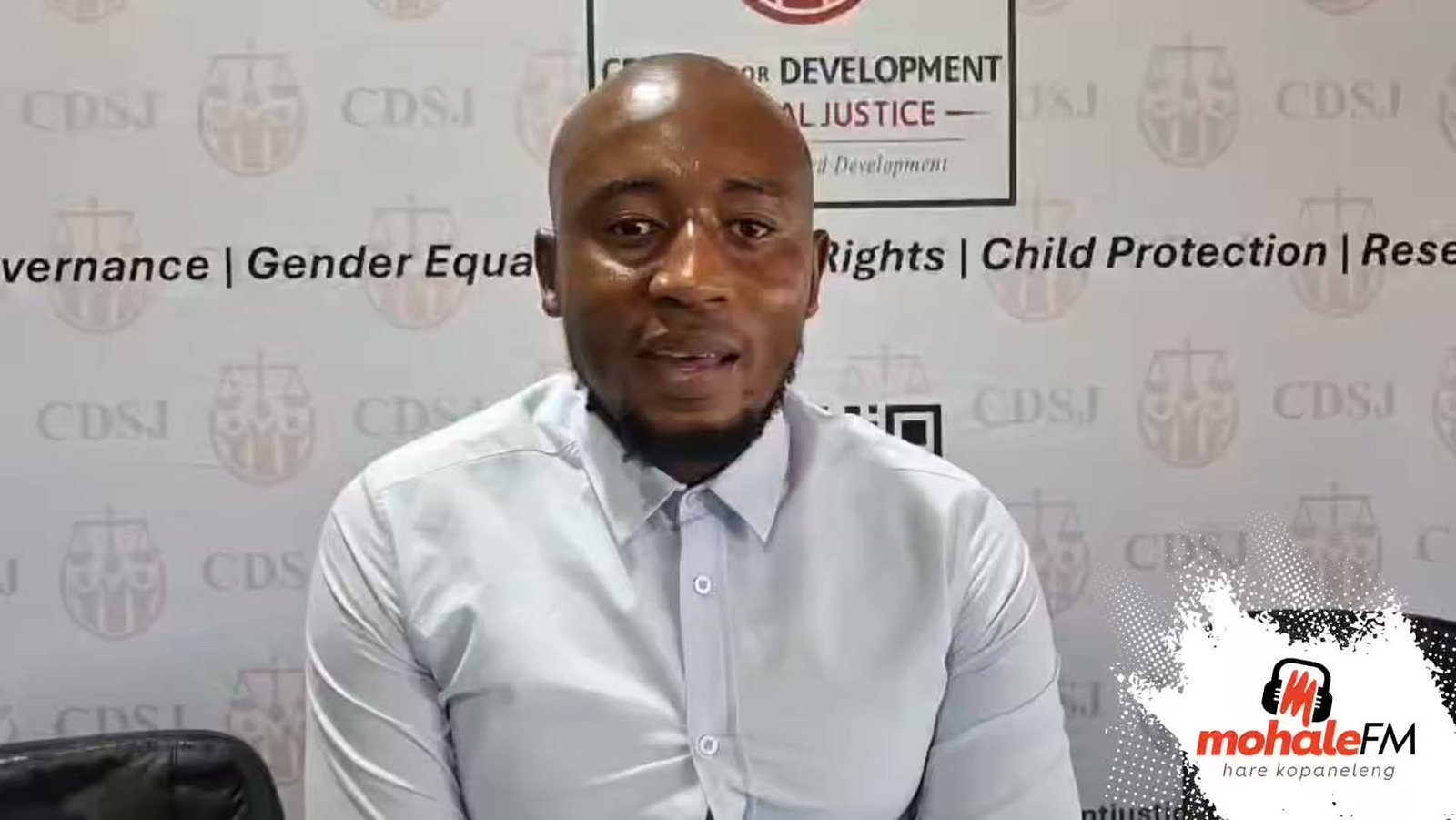
In a Mohale FM interview following CDSJ’s project planning meeting, Motlatsi Mofolo unpacked two connected justice concerns: stronger responses to technology-facilitated GBV and the unequal criminalisation of women and girls in pregnancy- and child-related cases.
Public understanding is an important part of justice reform. Following CDSJ’s gender-just criminal justice project implementation planning meeting on 26 August 2026, Mohale FM interviewed CDSJ’s Motlatsi Mofolo about two issues that require both technical institutional action and informed public discussion.
The interview connected the project’s legal and policy objectives to the everyday realities of people who may experience harm online, seek assistance from the police, or encounter a criminal justice process that does not examine responsibility equally. It also created an opportunity to explain why CDSJ is bringing justice institutions, civil society, women’s rights actors and communities into the same reform conversation.
Why take these issues to the public?
Legal reform cannot remain confined to technical meetings. People need to recognise emerging forms of abuse, understand that digital harm can have serious consequences, know where to seek assistance and see how unequal social expectations can influence the treatment of women and girls in criminal cases.
Two issues, one gender-justice question
Both topics ask whether the justice system has the rules, evidence practices and institutional awareness needed to respond fairly. In one area, technology changes how abuse is committed and recorded. In the other, gendered assumptions can influence whose conduct is investigated and who carries the legal and social burden.
Supporting CGPU responses to technology-facilitated GBV
The first issue concerned strengthening the capacity of the Lesotho Mounted Police Service’s Child and Gender Protection Unit (CGPU) to investigate technology-facilitated gender-based violence (TFGBV) and support effective prosecution.
TFGBV can involve threats, harassment, non-consensual sharing of intimate material, impersonation, coercive control, stalking and other abuse carried out or amplified through mobile phones, social media and digital platforms. The consequences are not “only online”: digital abuse can damage safety, dignity, livelihoods, education, relationships and participation in public life.
A credible justice response needs more than a general prohibition against abuse. Frontline officers require clear steps for receiving complaints, preserving digital material, recording evidence, protecting privacy, conducting survivor-centred interviews and coordinating with prosecutors and other service providers. Unclear procedures can weaken a case before it reaches court, while poor handling of sensitive material can expose a survivor to further harm.
CDSJ’s project therefore envisages focused consultations and case review to identify where current practice is failing, followed by the preparation of clearer legal rules and practical police guidance. The intention is to support tools that can be understood, adopted and used in real cases.
The gendered impact of one-sided criminal liability
The second issue concerned pregnancy- and child-related cases in which a woman or girl may face criminal responsibility while the conduct of men or other people involved is not adequately examined. This concern can arise in matters involving abortion, infant abandonment, child neglect and related allegations.
Gender-just justice requires an investigation of the full circumstances. Relevant questions include whether another person shared legal or practical responsibility, whether there was coercion or abandonment, what social and economic pressures were present, and whether the woman or girl had access to support, health care, protection and reliable information.
This does not mean removing accountability. It means applying accountability consistently and refusing to allow gendered assumptions to determine whose conduct is scrutinised. Where responsibility is shared, the justice process should not place the entire burden on the person who is already more visible, vulnerable or socially condemned.
Evidence before assumption
Cases should be investigated on their full facts, with attention to every person’s conduct and responsibility.
Context without discrimination
Justice institutions should understand coercion, dependency, stigma and unequal power without using them to excuse harm or blame women and girls.
Safeguarding and dignity
Privacy, informed consent and protection from further harm must guide case review, legal support and public communication.
Lessons for wider reform
A carefully supported case can reveal systemic gaps and help institutions improve law, policy and practice beyond one person’s experience.
From public discussion to institutional action
The interview followed a CDSJ planning meeting that examined the evidence, technical roles, consultation pathways, institutional responsibilities and safeguards needed for the wider project. The planned work includes drafting guidance on TFGBV, developing a position paper on one-sided criminal liability, engaging justice leaders and Parliament, assessing possible cases and supporting one deserving case where appropriate.
Radio engagement complements that technical work. It helps communities understand why these issues matter, encourages informed discussion and keeps attention on the responsibility of institutions to respond. It can also make specialist legal questions more accessible to listeners who may never encounter a policy document or formal consultation.
Watch and listen to the interview
The recording below was published by Mohale FM on Facebook and remains hosted by Mohale FM. Duration: 8 minutes 44 seconds.
If the embedded player is unavailable in your browser, watch the full recording directly on Mohale FM’s Facebook page.
CDSJ’s perspective: justice reform needs public ownership
CDSJ believes that a fair justice system must be able to respond to new forms of violence while also examining older patterns of gender inequality within law and practice. Clear police guidance, sound evidence handling and survivor-centred procedures are essential, but sustainable reform also depends on public understanding and institutional accountability.
By connecting technical planning with radio engagement, CDSJ is working to ensure that the reform conversation reaches beyond meeting rooms. Communities should be able to understand the issues, question unequal practices and participate in shaping a justice system that treats women and girls with dignity and fairness.
Leave a Reply